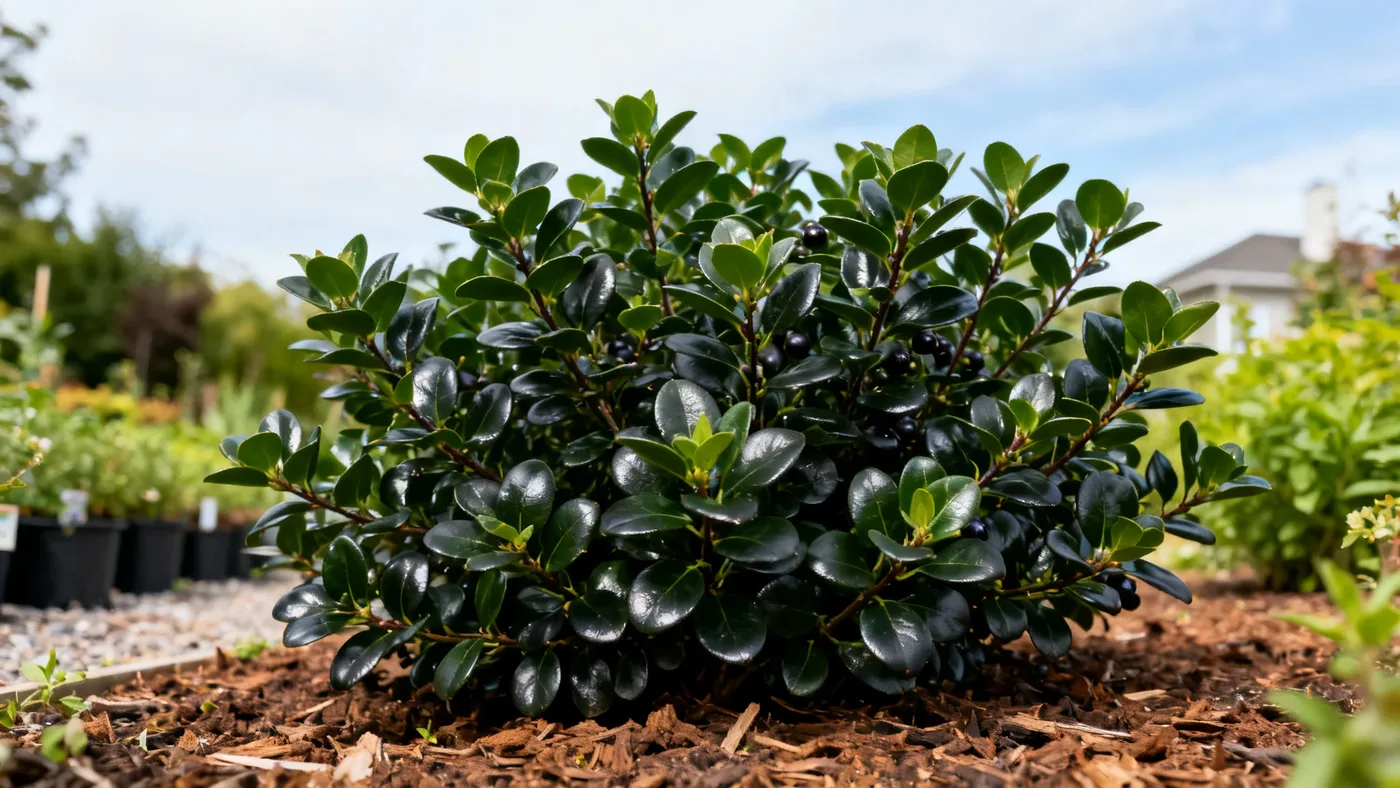
Pruning Chokeberry Bush: When and How to Cut It Back
Chokeberry Bush is one of the most forgiving shrubs to maintain, but strategic pruning keeps it compact, healthy, and producing its signature vivid fall color and persistent berries. Unlike shrubs that demand yearly shearing, Aronia melanocarpa responds well to a light hand and simple timing. This guide walks you through when to prune, what tools to use, and how to avoid the most common mistakes.
Why Prune Chokeberry Bush?
Pruning serves three main purposes. It removes dead or diseased wood that weakens the plant. It controls the suckering habit, particularly on species-form plants, which can spread by root shoots if left unmanaged. And it shapes the shrub to fit your landscape, whether you want a compact mound, a hedged row, or a more open, airy form. Proper pruning also encourages denser branching, which leads to more flowers in spring and more berries in fall.
The Best Time to Prune Chokeberry Bush
Timing is the single most important factor in pruning. You have two windows to work.
Right After Flowering (Recommended)
The ideal window is immediately after the plant finishes blooming. Chokeberry Bush flowers in mid to late spring, typically April or May depending on your zone. Once the small white to pale pink flowers fade, that is your signal to prune. Cutting right after bloom gives you two advantages: you avoid removing next year's flower buds (which begin forming shortly after flowering), and you allow the plant time to recover and set fruit before fall. In USDA zones 3 to 9, this post-bloom window usually falls in late May through early June.
Late Winter (Secondary Option)
You can also prune in late winter, before new growth breaks in spring. This timing works well for removing dead wood or heavy structural pruning. The downside is that you will cut off some flower buds, which reduces that year's bloom. Late winter pruning is best reserved for cleanup jobs or when you are reshaping the entire plant.
Tools and Materials You Will Need
Gather these items before you begin:
- Bypass pruning shears (hand pruners): for branches up to 0.5 inches diameter. Bypass shears make clean cuts; anvil-style shears crush tissue and can introduce disease.
- Lopping shears (long-handled): for branches 0.5 to 1 inch thick. The longer handles give you leverage and reach into dense growth.
- Pruning saw: for branches thicker than 1 inch. A curved pruning saw or folding saw is easier to control than a straight saw.
- Gloves: leather or nitrile to protect your hands from sharp twigs.
- Eye protection: glasses or safety goggles, since branches spring back when cut.
- Pruning sealer or wound dressing (optional): most arborists now skip this, as trees seal their own wounds. Use only if you are removing a main trunk or very large limb.
- Disinfectant spray: 10 percent bleach solution or 70 percent isopropyl alcohol. Wipe down tool blades between cuts if you notice any sign of disease (dark cankers, oozing sap, unusual discoloration).
Step-by-Step Pruning Instructions
Step 1: Assess the Plant Before You Cut
Walk around the shrub and examine its structure from all angles. Identify any dead or diseased branches, which will appear gray, brittle, or lacking leaves. Look for crossing branches that rub against each other, inward-growing limbs, or weak, spindly growth. Make a mental note of the plant's overall shape. Are you aiming to keep it as a natural mound, reduce its height, or reshape it as a low hedge?
Step 2: Remove Dead and Diseased Wood
Start by removing all dead wood. Cut dead branches back to the point where they meet green, living tissue. Make your cut just outside the branch collar, the slight swelling where the branch joins the main stem. For Chokeberry Bush, dead wood is usually easy to identify because it lacks the glossy dark green leaves that healthy branches display. Remove diseased branches the same way, cutting them completely out and wiping your tool blades with disinfectant after each cut if disease is present.
Step 3: Control Suckers on Species-Form Plants
If you have a species-form Chokeberry Bush rather than a compact cultivar, suckers (shoots arising from the roots or base of the plant) will develop. Cut these off as close to their base as possible. For persistent sucker growth, you can dig down slightly and remove the sucker at the point where it emerges from the root. If the same sucker keeps regrowing in the same spot, remove it each time it appears, as repeated cutting can eventually exhaust the bud. Dwarf or groundcover-habit cultivars produce far fewer suckers, so this step may be minimal or unnecessary on those types.
Step 4: Thin Out Crossing and Crowded Branches
Look inside the plant for branches that cross or overlap. Keep the branch that grows outward and upward; remove the one that grows inward or rubs against its neighbor. Thin out crowded areas in the center to improve air circulation. A well-pruned Chokeberry Bush should allow light to penetrate into the canopy and air to move through the branch structure. Aim for an open, naturalistic form with no branches tightly bunched together.
Step 5: Reduce Height or Width (If Needed)
Cut back the tallest or widest branches to the desired size. On species-form plants, expect mature heights of 3 to 6 feet and widths of 3 to 6 feet. Dwarf and groundcover cultivars typically mature at 1 to 2 feet tall and 2 to 3 feet wide. If you are shaping a hedge, cut branches back to your target height. For a natural form, make cuts just above an outward-facing leaf or bud, or just above a side branch. Avoid leaving stubs, which can rot and harbor disease.
Step 6: Step Back and Evaluate
After each round of cuts, step back and look at the overall shape. Prune a little, then assess. It is much easier to cut more than to undo a cut. If the shrub looks balanced and you have achieved your target shape, you are done.
Tips for Successful Pruning
- Make clean cuts. Bypass shears make sharp cuts that heal faster than crushed or ragged cuts. Dull blades crush tissue, so sharpen your tools before you start.
- Never remove more than one-third of the plant's total leaf area in a single season. Aggressive cutting stresses the plant and reduces flowering and fruiting.
- Prune conservatively on young plants. Chokeberry Bush grows slowly, at about 6 to 12 inches per year. Light pruning on plants in their first few years helps establish a good structure without setting back growth.
- Cut just outside the branch collar. The branch collar is where the branch meets the trunk or larger branch. Cutting flush against the main stem damages the plant's ability to seal the wound.
- Time your pruning to avoid late-season cuts. Never prune in late fall. New tender growth from fall pruning is easily damaged by frost, particularly in zones 3 and 4.
Common Mistakes to Avoid
Pruning too aggressively. Chokeberry Bush does not recover quickly from hard pruning. Heavy cuts can take years to fill back in. Use light, frequent pruning over heavy cuts on infrequent schedules.
Topping the plant. Cutting all branches to the same height, called topping, creates an unnatural appearance and causes weak regrowth. Instead, thin internally and cut individual branches back to different lengths for a natural form.
Pruning at the wrong time. Pruning in mid-summer or early fall removes developing flower buds and can trigger tender new growth that freezes in winter. Stick to the post-bloom or late-winter windows.
Using dull or dirty tools. Dull blades crush bark and open the door to disease. Dirty tools spread pathogens between plants. Keep your pruning tools sharp and clean.
Ignoring the branch collar. Cutting flush with the main stem removes the branch collar, the plant's natural callus-forming zone. Always leave the collar intact to promote fast healing.
What to Expect After Pruning
Immediately after pruning, the plant will look noticeably sparser, and some gardeners worry they have cut too much. This is normal. Within a few weeks, new leaves unfold from dormant buds, and the plant fills back in. By mid-summer, the shrub should look fuller and healthier than before pruning.
If you pruned right after flowering, you should see modest flowering the following spring. If you pruned in late winter, flowering may be lighter that year because some buds were removed. Regardless of when you prune, berry production typically returns to normal the following season.
For more comprehensive care information, see our full Chokeberry Bush care and growing guide.
Quick Reference: Pruning Checklist
| Task | Timing | Zone-Specific Notes | Result |
|---|---|---|---|
| Remove dead and diseased wood | After bloom (May-June) or late winter | Safe in all zones 3-9 | Healthier plant, reduced disease pressure |
| Cut back suckers | After bloom or as they appear | More aggressive on species form; minimal on dwarf cultivars | Contained footprint, cleaner appearance |
| Thin crossing branches | After bloom (preferred) | Any zone; safe timing | Improved air circulation, denser growth |
| Reduce height or shape | After bloom or late winter | Late winter pruning reduces that year's flowers | Plant fits landscape design, compact form |