How Big Does a Chokeberry Bush Get? Size and Growth Rate
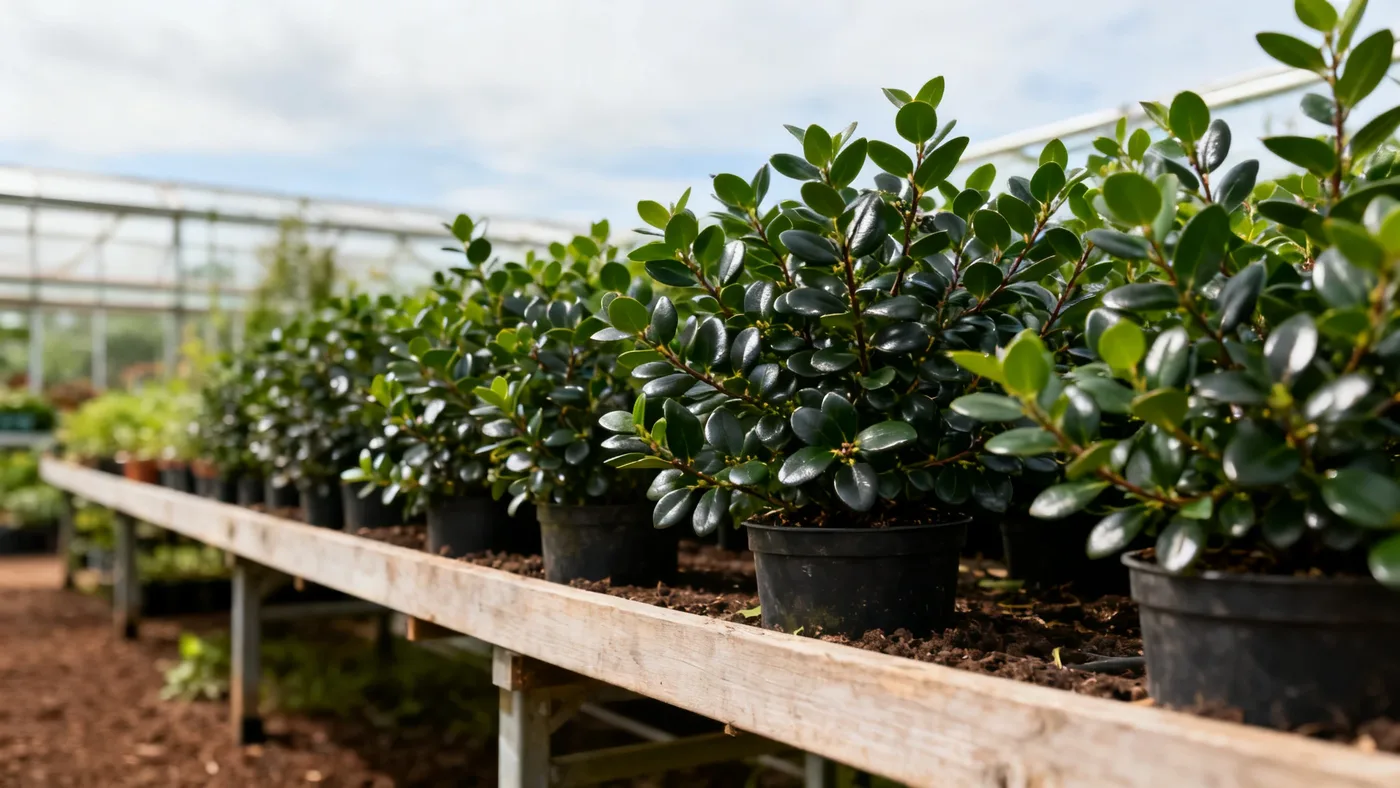
One of the most common things we see in our rows is a customer standing in front of a 2 gallon red chokeberry, sure it will stay that size. It won't. 'Brilliantissima' grows into an upright, vase-shaped shrub taller than most people, and it sends up suckers that widen it over the years.
This article talks about how big a red chokeberry gets, how fast it grows, how far apart to plant it and how to hold its size, and answers the questions customers ask us most. Read on to learn what to expect from the first summer after planting until the shrub fills its space.
Get the size wrong and you end up with a shrub that crowds its neighbors, or a hedge full of gaps. Get it right and you get white to light pink spring flowers, glossy red berries and scarlet fall leaves in a spot that fits.
Picking the Right Chokeberry Size Before You Plant
Decide on the mature size you want first, because red chokeberry is a much bigger plant than many people expect from the name. Here is how we explain it to customers.
What's the difference between red chokeberry and the dwarf chokeberries?
Red chokeberry, Aronia arbutifolia, is the shrub we grow, and 'Brilliantissima' is the selection we ship. It reaches well above head height in most gardens, so it suits hedges, screens and mass plantings. The dwarf chokeberries sold for small spaces are selections of a different species, black chokeberry, and they stay low with black fruit instead of red.
How tall and wide is a mature chokeberry bush?
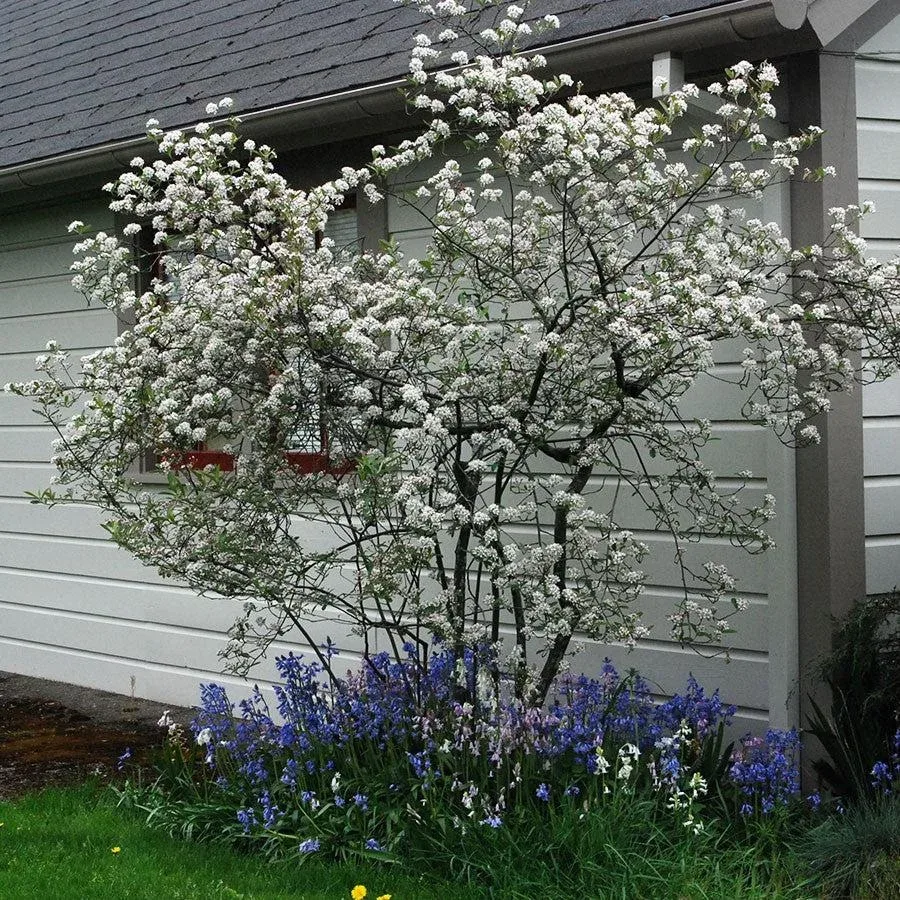
Red chokeberry typically grows in a vase shape to 6 to 12 feet tall and 3 to 6 feet wide, though it tends to sucker and form colonies. These are approximate ranges because individual plants vary with local growing conditions, water and how you prune.
You will see other numbers in print. Oregon State University lists red chokeberry to 10 feet with a spread of 3 to 5 feet. In our rows, we tell you to plan on a shrub somewhere in that 6 to 10 foot band, and anything taller is a bonus you can prune.
Is chokeberry bush a small or large shrub?
Red chokeberry is a large shrub by garden standards, even though it stays narrow for its height. It is deciduous and naturally multi-stemmed, with a stiff, upright habit and a fibrous root system, and it widens over time as suckers come up around the base.
Choosing a Compact Chokeberry Cultivar
If your space is small, cultivar choice is the simplest fix. Our guide to dwarf and full-size chokeberry cultivars goes deeper, and the basics are below.
Is 'Brilliantissima' a compact red chokeberry?
It is described as compact, with abundant flowers and fruit, but compact here is relative. It is still a tall shrub that needs room to reach its full height. Think of it as a tidy version of the species, not a small plant.
Are there dwarf red chokeberry cultivars?
Yes, though the choice is narrow. Berry Scape is a red chokeberry selection with a mounded form at about 4 feet tall and 5 feet wide, which is lower than 'Brilliantissima' but still not a dwarf in the knee-high sense. Ask your nursery for the specific cultivar name so you can confirm the mature size.
What if I need a chokeberry under 3 feet?
Then look at black chokeberry instead of red. Several black chokeberry dwarfs stay between about 8 inches and 3 feet tall, and they are the usual pick for a low edge or a small bed. You give up the red berries, so weigh that before you switch.
Which chokeberry cultivar is best for containers?
For a pot that will stay a pot for good, a dwarf black chokeberry is the easier fit. 'Brilliantissima' can live in a large container for several years, starting from a 2 gallon or 3 gallon nursery plant, but it will want a big pot or a place in the ground as it grows.
Spacing Your Chokeberry at Planting
Spacing is the one size decision you can't easily undo later. For the planting steps themselves, see our guide on how to plant a red chokeberry.
How far apart should I space chokeberry bushes?
Space red chokeberry about 3 to 6 feet apart, which matches its mature width. Use the closer end of that range for a hedge or mass planting that should knit together, and the wider end if you want each shrub to keep its own vase shape.
How much space does chokeberry bush need?
Give each plant 3 to 6 feet of width and plenty of headroom, since it grows well above eye level. If you're planting for a hedge or border, account for the mature spread and for the suckers that will fill in around the base.
Can I plant chokeberry bushes close together?
Yes, within reason. Plants set much closer than about 3 feet crowd each other as they mature, which reduces air circulation and can raise disease risk. For a dense hedge, plant at about 3 feet and plan to thin the oldest stems each year to keep your desired form.
What's the minimum spacing for a hedge?
For a filled-in hedge of red chokeberry, plant about 3 feet on center. Wider spacing, up to 6 feet, lets each shrub's form show before the suckers close the gaps.
Should I plant more densely because the plants are tall and narrow?
No, not by much. Red chokeberry is narrow for its height, but it fills sideways through suckering, so the gaps close over time. It also tends to become leggy with age, which is one reason it looks best in groups where neighboring shrubs hide each other's bare lower stems.
Chokeberry Growth Rate Year by Year
Red chokeberry is not a fast shrub, and that surprises people who expect a quick screen. These are the milestones we see from planting through maturity.
How fast does chokeberry bush grow?
Red chokeberry has a slow growth rate. The exact pace depends on sunlight, water and soil quality, so gardens with full sun and steady moisture see more growth each year than dry or shady sites.
How long until my chokeberry bush reaches full size?
Plan on several years. A young plant spends its early seasons building roots, then adds height and stems at a steady pace after that. This timeline assumes the plant is established and getting adequate water and sunlight during the growing season.
When will my chokeberry bush first flower?
Red chokeberry flowers in spring, usually in May, with clusters of white to light pink blooms and red anthers. In warmer areas they can open earlier, and the University of Maryland Extension lists March through May. Butterflies and bees visit the blooms, then glossy red berries follow in fall and the leaves turn orange to scarlet.
Why does my chokeberry bush seem to grow slowly?
Some of it is simply the plant, which grows slowly by nature. Beyond that, slow growth often signals too little sun, uneven watering, or poor soil. Red chokeberry grows best in full sun with steady moisture, and it tolerates wet sites better than most shrubs. Check that your plant gets at least 6 hours of direct sun daily.
Does chokeberry bush grow faster in certain zones?
Red chokeberry is hardy in USDA zones 3 to 9, and we don't see large differences in growth across that range. A longer season in the warmer zones may give a little more growth each year, but the plant's slow habit remains the limiting factor.
Managing Chokeberry Size and Spread
Once your red chokeberry is established, a little yearly attention keeps it in bounds. Most of that work is pruning and sucker control, and our pruning guide covers the cuts in detail.
Does chokeberry bush spread through suckering?
Yes, red chokeberry spreads by root suckers and can form a colony over time. This trait makes it useful for filling a wet bank or a rain garden, but it means you will need to remove suckers if space is limited.
How can I control chokeberry bush size?
Thin, don't shear. Removing about one-third of the oldest stems each year keeps the plant vigorous and holds it closer to the size you want. Do this right after flowering or in late winter, cutting the oldest stems at the base and leaving the younger ones to carry flowers and fruit.
What should I do if my chokeberry gets too tall?
Cut the tallest canes back at the base in late winter or right after flowering, rather than topping the whole shrub. New stems come up from below and replace them at a lower height.
One piece of common advice we don't follow is shearing chokeberry into a tight, flat-sided hedge. Shearing leaves stiff, bare-legged stems and costs you flowers and berries. We thin the oldest stems instead and let the shrub keep its natural vase shape.
Is chokeberry bush suitable for small gardens?
Yes, if you have a narrow spot with some height to spare, such as a corner or the side of a house. 'Brilliantissima' can be managed in small spaces with yearly thinning and sucker removal. If the space is also low, under a window for example, a dwarf black chokeberry is the better fit.
How long does it take to remove suckering shoots?
Removing suckers is straightforward but must be repeated several times during the growing season, late spring through early fall, to keep new shoots from establishing. Customers with limited space tell us this is the main chore, and it is why we suggest letting red chokeberry colonize only where you want a naturally expanding thicket.
Quick Reference: Chokeberry Bush Size and Growth
This table puts the main size and growth figures for 'Brilliantissima' red chokeberry next to what each one means in your yard.
| Characteristic | 'Brilliantissima' Red Chokeberry | What It Means in Your Yard |
|---|---|---|
| Mature Height | 6-12 feet | Taller than most fences, so plan for headroom |
| Mature Width | 3-6 feet (spreads via suckers) | Narrow for its height, widens over time |
| Growth Rate | Slow | Buy the size you can wait for |
| Years to Maturity | Several years | Roots first, then steady height and stems |
| Flowering | Spring, usually May | White to light pink clusters for bees and butterflies |
| Recommended Spacing | 3-6 feet apart | Closer for a hedge, wider for single shrubs |
| Best for Containers | Only in a large pot, for a few years | Plant it out or pot it up as it grows |
| Suckering Tendency | Forms colonies | Pull suckers where space is limited |
| Hardiness Zones | 3-9 | Grows across most of the country |
Planning Around Your Chokeberry's Full Size
Plan for the mature size, not the pot size. Red chokeberry 'Brilliantissima' becomes a 6 to 12 foot vase-shaped shrub that spreads by suckers, so space it 3 to 6 feet apart, give it sun and steady moisture, and expect slow, steady growth over several years. For watering, feeding and the rest of the routine, see our complete chokeberry care guide.
Chokeberry Bush
Nursery-grown Chokeberry Bush in sizes from 2 GALLON, shipped to your door.
From $93.12
Shop Now →Every red chokeberry we ship is grown by us, then potted, packed and shipped so it arrives ready to plant. We are growers first, and we grow and ship these shrubs ourselves, so the size we describe is the size you can plan around.