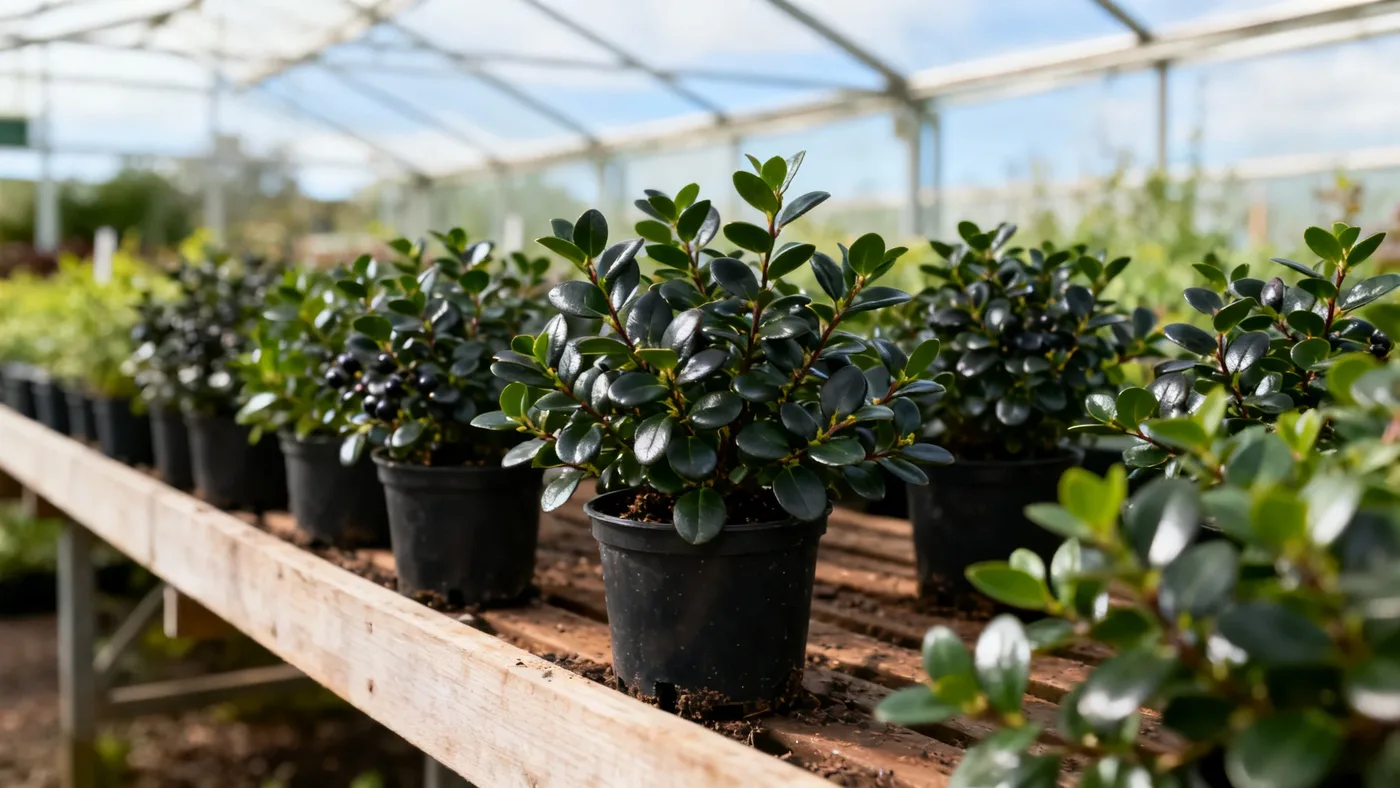
Chokeberry Bush Varieties: Dwarf vs Full-Size Cultivars
Choosing the right chokeberry bush cultivar starts with understanding scale. A full-size chokeberry bush variety delivers dramatic 3- to 6-foot height and width, while dwarf chokeberry bush cultivars like the Low Scape Mound type stay compact at 1 to 2 feet tall and 2 to 3 feet wide. Both pack the same striking fall color and persistent berries; the difference is how much garden real estate they claim. This guide cuts through cultivar confusion and shows you exactly which chokeberry bush varieties fit your space and goals.
Understanding the Two Type Categories
Chokeberry bush varieties fall into two broad categories, each serving different landscape needs. The traditional full-size form, species Aronia melanocarpa and its taller cultivars, takes up substantial space but creates visual impact and useful screening. Compact cultivars marketed under names like Low Scape Mound target foundation planting, containers, and small gardens where height matters.
Both types share the botanical family (Rosaceae) and core traits: glossy dark green leaves, white to pale pink spring flowers, outstanding red-to-orange fall color, and persistent dark purple-black berries through winter. What sets them apart is mature size, spread habit, and maintenance demands around suckering.
Full-Size Chokeberry Bush Varieties
Full-size chokeberry cultivars like 'Autumn Magic', 'Viking', and 'Iroquois Beauty' reach their mature height and width within 3 to 5 years at a slow-to-moderate pace of roughly 6 to 12 inches per year. You are looking at shrubs that occupy 3 to 6 feet in height and equal width when fully grown.
These larger forms excel as specimen plants, privacy hedges, or bird-food stations. A single mature plant provides real screening value and creates a strong focal point during fall color and berry season. Because the species form naturally spreads by root suckers and bird-dispersed seed, spacing becomes important: wider spacing works better for the full-size type, as colonizing tendency can fill a bed faster than you intend.
Full-size varieties tolerate a wide range of soil conditions (clay, loam, sandy), moisture levels from wet to moderate drought once established, and partial shade to full sun. They flower within 2 to 3 years of planting. Best fall color and heaviest berry production occur in full sun to part-shade settings within USDA zones 3 through 9.
Dwarf and Compact Chokeberry Varieties
Compact chokeberry bush cultivars, including Low Scape Mound and related Low Scape Snowfire types, mature at just 1 to 2 feet tall and 2 to 3 feet wide. They grow at the same slow-to-moderate rate as full-size forms but stop sooner, making them ideal for foundation plantings, low hedges, and containers. The exact registered cultivar name behind commercial Low Scape series products may vary, so confirm the tag when purchasing to verify size specs.
The dwarf form retains all the ornamental advantages of its taller cousins: spring bloom, fall foliage drama, winter berries, and strong bird-attracting power. The main trade-off is reduced suckering spread and colonizing tendency, which actually works in your favor in smaller spaces. They still tolerate poor drainage, adapt to sandy or clay soil, and thrive in zones 3 through 9. Container suitability makes dwarf varieties especially popular with gardeners lacking in-ground space.
Because these compact types take up minimal real estate, they work beautifully in multiples for mass effect without the spatial commitment of full-size shrubs. Two or three Low Scape Mound plants planted 2 to 4 feet apart create a tidy groundcover, while a single full-size cultivar occupies the same area alone.
Side-by-Side Comparison Table
| Attribute | Full-Size Varieties | Dwarf/Compact Varieties |
|---|---|---|
| Mature Height | 3–6 feet | 1–2 feet |
| Mature Width | 3–6 feet | 2–3 feet |
| Annual Growth Rate | 6–12 inches/year | 6–12 inches/year |
| Years to Full Size | 3–5 years | 2–4 years |
| Spacing (typical) | Wider spacing preferred due to suckering | 2–4 feet apart for mass planting |
| Typical Cultivars | 'Autumn Magic', 'Viking', 'Iroquois Beauty' | Low Scape Mound, Low Scape Snowfire |
| USDA Zones | 3–9 | 3–9 |
| Sun Requirements | Full sun to part shade | Full sun to part shade |
| Fall Color Quality | Outstanding red to orange-red | Outstanding red to orange-red |
| Winter Berries | Persistent dark purple-black | Persistent dark purple-black |
| Container Suitable | Yes, but requires larger pot | Yes, particularly well-suited |
| Suckering Habit | Moderate to aggressive in species form | Less pronounced in compact cultivars |
Pros and Cons Breakdown
Full-Size Chokeberry Bush Varieties
Pros:
- Greater visual impact and screening power in a single plant
- Excellent for establishing privacy hedges or windbreaks
- Taller specimens reach eye level, drawing attention to fall color and winter berries
- Robust, long-lived shrubs (20+ years with good care)
- Full range of wildlife benefits, especially for nesting and food
- Highly adaptable to poor soil and wet sites (native to swamps and bogs)
Cons:
- Requires 3–6 feet of space in height and width
- Suckering tendency can overtake surrounding beds without management
- Slower to fill a space if you buy smaller nursery stock
- Needs regular pruning to keep the colonizing habit in check
- Not ideal for small urban gardens or tight foundation spaces
Dwarf and Compact Varieties (Low Scape Mound, Low Scape Snowfire)
Pros:
- Fits foundation plantings, containers, and small gardens
- Multiple plants achieve mass-planting effect in tight spaces
- Reduced sucker spread makes maintenance easier
- Fast to mature visual effect (reaches full size in 2–4 years)
- Excellent for low hedging and groundcover applications
- Perfect for deck or patio containers
- Same ornamental and wildlife benefits as full-size in compact form
Cons:
- Provides less screening per plant (need multiples for privacy)
- Lower berries sit closer to ground, may be less visible from a distance
- Fewer cultivar options available commercially than full-size types
- Higher per-plant cost if buying several for mass effect
Best For: Use Cases and Recommendations
Choose Full-Size Chokeberry Bush Varieties If You Have:
- Space to fill: Large foundation beds, hedgerow sites, or landscape screens where a 3- to 6-foot shrub fits comfortably
- Privacy needs: You want screening between properties or blocking an undesirable view in one or two plants rather than many
- Specimen status: A spot where a single, dramatic shrub with fall color and winter berries becomes a landscape focal point
- Wet or poorly drained soil: Low-lying areas where chokeberry's native swamp-loving roots thrive
- Wildlife habitat goals: Interest in nesting birds and year-round food source; taller form provides better protective cover
- Tolerance for maintenance: Willingness to prune suckers occasionally to keep the plant contained
Choose Dwarf Chokeberry Bush Cultivars If You Have:
- Limited space: Foundation plantings, narrow beds, or small urban gardens where 1- to 2-foot height is the target
- Container gardening focus: Decks, patios, or balconies where in-ground planting is not an option
- Mass-planting vision: You want a low groundcover or hedge by placing multiple Low Scape Mound plants 2 to 4 feet apart
- Maintenance preference for minimal upkeep: Compact cultivars require less aggressive pruning and sucker management
- Front-yard or formal landscaping: Neat, orderly appearance where oversized growth would look out of proportion
- Mixed borders: Layering height with perennials and groundcovers, using dwarf chokeberry as the middle tier
Which Should You Choose? The Verdict
Neither chokeberry bush cultivar type is universally better. The answer depends entirely on your garden's dimensions, maintenance tolerance, and visual goals.
Full-size chokeberry bush varieties deliver maximum impact per plant. If you have the space and want one specimen to do heavy lifting (screening, focal point, native habitat), 'Autumn Magic', 'Viking', or 'Iroquois Beauty' are the right picks. Plan for 3- to 6-foot mature dimensions and occasional pruning to manage the suckering habit. They excel in naturalized settings, rain gardens, and landscape edges where their native swamp-loving nature and wildlife value shine.
Dwarf chokeberry bush cultivars, especially Low Scape Mound types, are the pragmatic choice for most home gardeners. You get all the ornamental and ecological benefits, fall color, persistent berries, pollinator attraction, year-round interest, in a footprint that fits foundation plantings, containers, and small spaces. When you plant two or three 2 to 4 feet apart, you create a cohesive mass planting that looks intentional and controlled, not like you ran out of space.
For detailed planting and care guidance once you have made your choice, see our complete guide to chokeberry bush care, which covers soil prep, watering schedules, pruning timing, and season-by-season maintenance for both forms.
Quick Reference Checklist
| Decision Point | Full-Size | Dwarf |
|---|---|---|
| Available garden space (3–6 ft tall)? | ✓ Yes | ✗ No |
| Want screening in one or two plants? | ✓ Yes | ✗ No |
| Planting in a container? | ✗ Not ideal | ✓ Excellent |
| Prefer minimal pruning/sucker management? | ✗ No | ✓ Yes |
| Have wet or boggy soil? | ✓ Full-size thrives | ✓ Dwarf thrives |
| Zone 3–9 within your region? | ✓ Both hardy in all zones | ✓ Both hardy in all zones |
| Want outstanding fall color and berries? | ✓ Yes | ✓ Yes |
| Planning a mass foundation planting? | ✗ Usually one or two | ✓ Multiple plants work well |