Chokeberry Bush Bloom Time: Flowers and How Long They Last
If you're planning spring color in your garden or landscape, chokeberry bush bloom time is worth marking on your calendar. This native deciduous shrub puts on a reliable show of delicate white-to-pink flowers in mid to late spring, but the details matter: the exact timing varies by your hardiness zone, bloom duration is shorter than many ornamentals, and maximizing that flower display takes a bit of knowhow.
Whether you're a home gardener planting your first Aronia melanocarpa or a landscaper scheduling installation for spring impact, understanding when chokeberry bush flowers and how long those blooms persist will help you set realistic expectations and plan companion plantings that carry the color baton when the flowers fade.
When Does Chokeberry Bush Flower? Zone-by-Zone Timing
Chokeberry bush flowers in mid to late spring, with the exact timing controlled by your hardiness zone and local spring warmth. In USDA zones 3-4 (northern regions), expect blooms in late April through May. In zones 5-6 (mid-Atlantic and northern Midwest), look for flowers from mid-April through early May. In zones 7-8 (Southeast and lower Midwest), blooms typically arrive in early to mid-April. In zone 9, flowers may open as early as late March or early April.
The baseline remains consistent: blooms follow the plant's phenological response to accumulated warmth and lengthening days. A warm spring will accelerate flowering by a week or two; a slow spring will delay it just as much. Chokeberry bush bloom season is rarely a surprise if you know your zone and watch for buds swelling in late winter.
One practical note: chokeberry bushes do not flower in their first year after planting. Typically, these shrubs flower within 2 to 3 years of establishment, so if you plant a bare-root or small containerized plant this spring, plan to wait a season or two before the chokeberry bush flowers appear.
What Chokeberry Flowers Actually Look Like
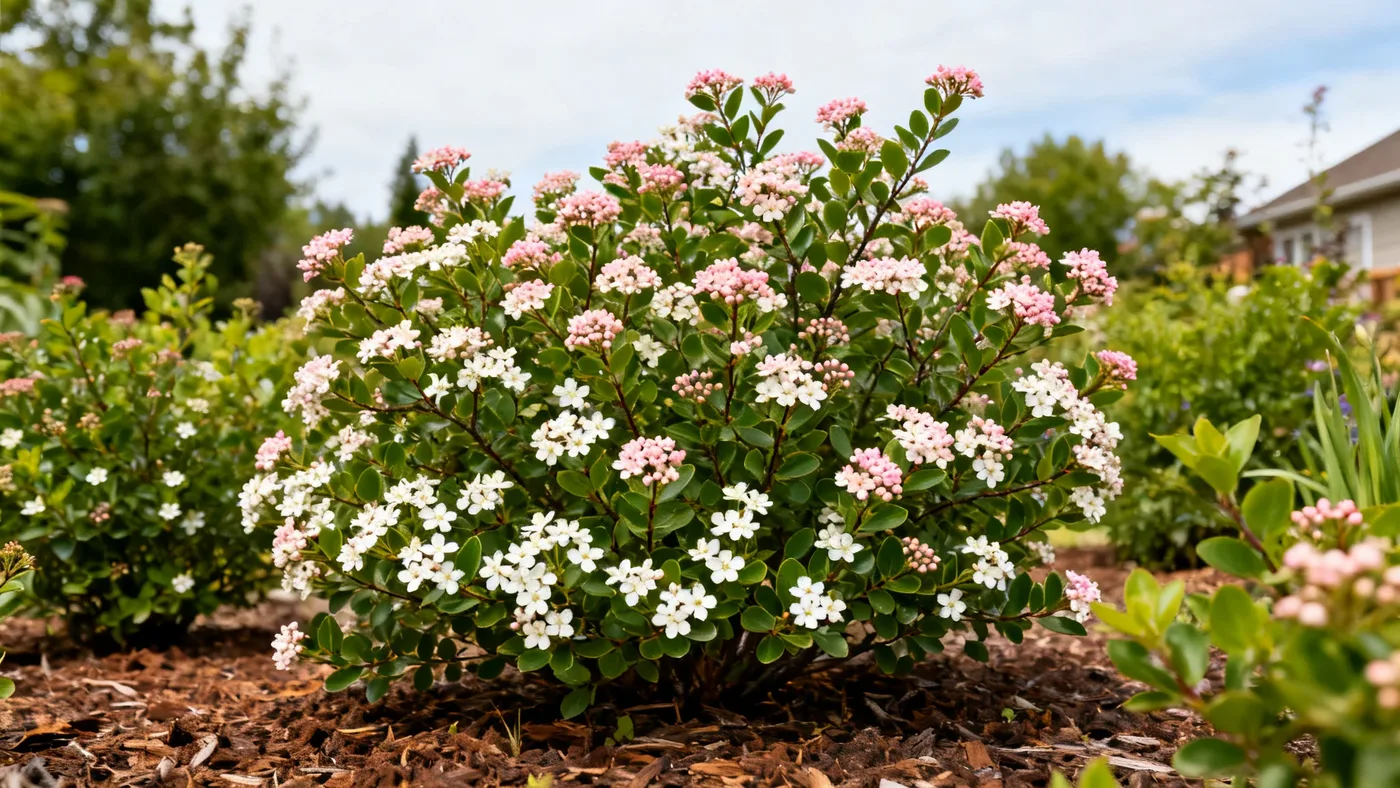
Chokeberry bush flowers are understated, which is exactly why they suit so many garden styles. The blooms are small, five-petaled, and clustered in flat formations (called corymbs). Color ranges from pure white to very pale pink, with the pink intensity depending on cultivar and sunlight exposure.
The flowers themselves are not fragrant in any meaningful way. If you're selecting aronia specifically for spring fragrance, look elsewhere. Chokeberry flowers are attractive to bees and other pollinators, though, making them a valuable addition to any native plant or pollinator garden.
The flowers cover the shrub densely, so even though individual blooms are modest, the overall massed effect is gentle and spring-fresh. On a compact cultivar like the Low Scape Mound type (1 to 2 feet tall), the flowers blanket the plant. On the taller species form (3 to 6 feet), the bloom is more distributed but still substantial.
How Long Do Chokeberry Blooms Last?
Chokeberry bush blooms typically persist for 2 to 3 weeks once they open. This is a moderate bloom duration for a spring shrub. The flowers do not all open on the same day; they progress from bud to full open over several days within each cluster, which extends the visual show slightly. However, once individual flowers fade, they drop relatively quickly.
Full flowering lasts roughly mid to late spring depending on your zone. That 2- to 3-week window is the peak: after that, petals fall and the shrub transitions to its next phase. This is not a long-blooming shrub compared to, say, a crabapple or a rhododendron (both of which can flower for 4 to 5 weeks in ideal conditions), so if spring flowers are your top priority, plan for chokeberry as one player in a tiered bloom sequence rather than the sole star.
The upside: after the flowers fade, aronia transitions seamlessly into its secondary season. The foliage is glossy and dark green through summer, and by late fall, the plant pivots to spectacular orange-red fall color and persistent dark purple-black berries that feed birds all winter long.
Factors That Affect Bloom Time and Duration
Sunlight Exposure
Chokeberry bush flowers best in full sun. While these shrubs tolerate part shade, plants in shadier spots will produce fewer flower clusters and may bloom slightly later. For maximum chokeberry bush blooms, site your plant where it receives at least 6 hours of direct sun daily. Full-sun plants also develop better fall color and fruit more reliably, so this is a triple-win factor.
Soil and Water Conditions
Aronia melanocarpa is highly adaptable to soil type, tolerating clay, loam, sandy soils, and even wet or poorly-drained conditions (it's native to swamps and bogs). However, a plant stressed by drought or severely compacted soil may produce fewer flowers. Once established, chokeberry is moderately drought-tolerant, but consistent moisture during the growing season supports robust bloom.
If your chokeberry bush is in consistently wet soil (standing water for days at a time), it will survive, but bloom production may be lighter. Aim for consistently moist but not waterlogged soil for best flowering.
Age and Maturity
Young plants (1 to 3 years old) will flower lighter or not at all. Once a chokeberry reaches full maturity (3 to 5 years), bloom production increases year over year. An established, mature shrub in full sun will reliably produce a showy bloom every spring for decades (these plants live 20 to 30+ years).
Pruning Timing
Improper pruning timing can eliminate an entire season's flowers. Chokeberry sets flower buds in late summer and fall on the previous season's growth. If you prune your aronia in early spring (late February or March), you risk cutting off those flower buds. Instead, prune chokeberry bush right after flowering ends, in early summer, or wait until late winter (January to very early February) to remove dead wood and control shape. This timing preserves next year's bloom.
Maximizing Chokeberry Bush Bloom
If spring flowers are a priority for your chokeberry planting, here are the key steps:
- Plant in full sun for the most prolific bloom and best fall color.
- Choose a site with good drainage or consistent moisture, avoiding either extreme drought or standing water.
- Wait 2 to 3 years after planting before expecting a significant flower show.
- Prune only after flowers fade (early summer) or in late winter before bud break (no spring pruning).
- Apply a light, balanced slow-release fertilizer in early spring to support flower production.
- Monitor for pests like aphids or scale insects, which can weaken bloom if populations are high; treat early if needed.
What Comes After the Bloom
Once the chokeberry bush blooms fade in late spring, the plant shifts gears. Summer brings glossy green foliage that requires no special care. By midsummer, small berries begin to form in the same clusters where flowers stood. These berries ripen over summer and fall, turning from red to dark purple-black by September or October, depending on your zone.
Those berries are edible (though very astringent raw) and beloved by songbirds, who often strip them by mid-winter. If you want persistent winter interest, select a cultivar or site that birds visit less frequently, or plant in a spot where you can see the shrub from inside on winter mornings.
For complete growing and care information beyond bloom time, see our complete chokeberry bush care guide, which covers planting depth, spacing for hedging, pest management, and site selection.
Quick Reference: Chokeberry Bush Bloom Timeline and Tips
| Zone(s) | Typical Bloom Start | Peak Bloom Duration | Key Tip |
|---|---|---|---|
| 3-4 (Far North) | Late April | 2-3 weeks into May | Plant in full sun; watch for late frost impact on buds |
| 5-6 (Mid-Atlantic, North Central) | Mid-April | 2-3 weeks through early May | Reliable timing; minimal frost risk by bloom stage |
| 7-8 (Southeast, Lower Midwest) | Early to mid-April | 2-3 weeks; may fade by late April | Heat accelerates bloom cycle; provide afternoon shade in zone 8 if needed |
| 9 (Warmest Regions) | Late March to early April | 2-3 weeks; brief window | Earlier buds mean earlier frost risk; site in a frost-sheltered location |
Bloom and Care Checklist
- Check bloom timing for your zone by late winter.
- Ensure your chokeberry receives at least 6 hours of direct sun for best flower production.
- Do not prune in early spring; prune only after bloom or in late winter.
- Expect blooms to last 2 to 3 weeks once they open.
- Do not expect significant flowers in year 1 or 2 after planting; wait 2 to 3 years for full bloom potential.
- Monitor soil moisture during the bloom period; consistent moisture supports flower health.
- Watch berries ripen after blooms fade; they mature to dark purple-black by fall.