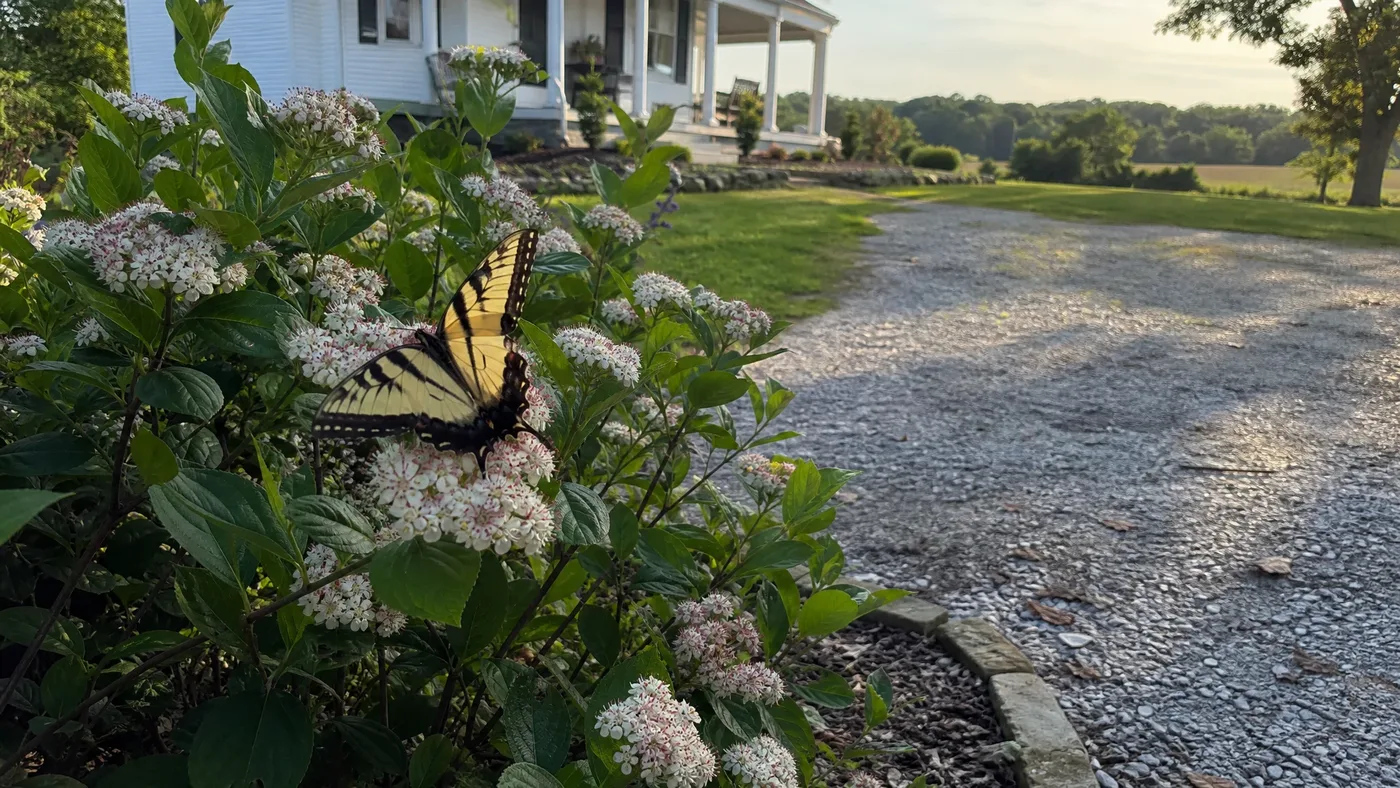
Is Chokeberry Bush a Host Plant for Butterflies?
Garden centers love the phrase "host plant," so what would it take to prove a shrub earns it? A butterfly has to lay eggs on it, and a caterpillar has to eat the leaves and grow up. A tag that says "good for butterflies" proves neither.
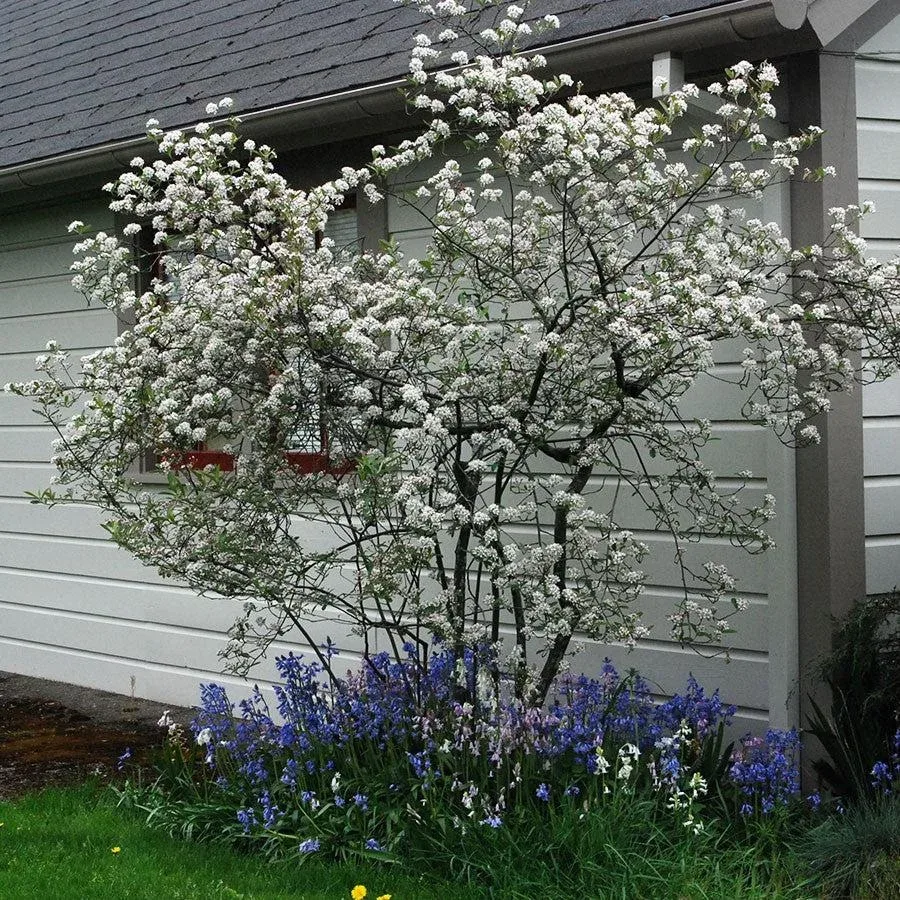
Below, you'll find out what a host plant really is, how red chokeberry's May bloom and winter berries differ from larval hosting, what can and cannot be documented about caterpillars on the leaves, and how to check your own shrub. This matters because a shrub sold as a butterfly host that never raises a caterpillar leaves a hole in a wildlife garden, and a sprayed one can lose what little it offers.
Our position on 'Brilliantissima' is simple: the claim is plausible but modest, and you should see it for yourself.
What Counts as a Host Plant?
Before we test chokeberry, we need a definition that is hard to fudge. Two jobs get confused all the time, and only one of them is hosting.
Host Plant Versus Nectar Plant
A host plant feeds the larvae. The adult butterfly or moth lays eggs on it, and the caterpillar chews its leaves, grows, and eventually leaves to pupate. A nectar plant feeds adults, which sip from flowers and move on. A plant can be one, the other, both, or neither.
Most "butterfly bush" marketing sits on the nectar side. Adults visit, so the plant gets sold as a butterfly plant, even though no caterpillar may ever eat a leaf.
A Fair Test for the Claim
Here is the standard we hold chokeberry to. A host claim should name a specific butterfly or moth, say that its larvae eat the foliage, and rest on a record you can check, such as a regional extension list or a photographed caterpillar on the plant. A vague line about "wildlife value" fails that test.
By that standard, a shrub passes if three things happen. Eggs get laid, larvae feed, and the larvae complete their growth. Everything else, however pretty, is a different kind of wildlife value.
Chokeberry Bush Nectar Feeds Adults, Not Caterpillars
The spring bloom is the part of this shrub most people notice, and it is real wildlife value. It just is not hosting.
The flowers open in small clusters of white to light pink, 5-petaled blooms with red anthers. Oregon State counts 9 to 20 flowers in each cluster. Bloom timing depends on your region: NC State gives May, while the University of Maryland Extension lists March to May. Our bloom time guide covers how long the flowers last.
Those open, shallow flowers are easy for adult insects to work, and the extension pages agree on who comes. The University of Maryland Extension says butterflies and other pollinators feed on the flower nectar. Bees are the visitors we think of first, and our wildlife guide on birds, bees and pollinators covers them. A butterfly that lands on a bloom is feeding itself. It tells you nothing about whether its offspring will eat the leaves.
Count a nectar visit as a visit and nothing more. If you see a butterfly on the flowers in May, enjoy it, but do not log the shrub as a host on that evidence alone.
The Caterpillars Documented on Chokeberry Bush Foliage
This is the section the title asks about, and the skeptic's answer comes with honest limits. We will say what the sources show and what they do not.
What the Sources We Can Cite Say
The nearest line we can point to comes from NC State Extension, which says butterflies and pollinators are attracted to the flowers for nectar and files red chokeberry under butterfly gardens. Read it carefully. It is about flowers and nectar, not leaves. It names no caterpillar.
The extension pages we rely on for this plant list no larval species at all. That is a gap in what we can verify, not proof that no caterpillar eats chokeberry.
The Coral Hairstreak Claim
You will see the coral hairstreak named online as a butterfly whose larvae feed on chokeberry foliage. We have not found a source we can cite for it, so we treat it as plausible but unconfirmed. If someone sells you the shrub on that promise, ask where the record is.
The honest ranking runs from strongest to weakest. A photograph of a caterpillar feeding on your own plant is the best evidence. A regional list from an extension service or native plant society comes next. A repeated line on a plant tag is the weakest.
Also expect modesty. A specialist caterpillar may eat only a few leaves, and the damage can be hard to spot on a shrub that grows in a vase shape to 6 to 12 feet tall. Even a young plant from a 3 gallon pot fills out over a few seasons, and a mature colony offers a lot of foliage to search.
Leaves, Stems and Bark as Nursery Space
If a caterpillar does use chokeberry, it uses the plant's physical parts in different ways. Knowing which part to inspect makes your search far shorter.
Leaves: Where Larvae Feed
Leaves are the feeding surface and the first place to look. Check the undersides, which on red chokeberry are grayish and covered in fine hairs, and where small caterpillars often sit. Chewed edges, small round holes, and tiny dark droppings on the leaf below are all signs of something eating.
The glossy leaves turn orange to bright red in October, and 'Brilliantissima' colors a deep scarlet, which makes late-season holes easier to see against the color. Our identification guide will help you be sure the leaves you are checking are chokeberry and not a look-alike.
Stems, Bark and the Ground Beneath
Stems and bark are shelter. The reddish-brown bark is thin and peels as the shrub ages. Some caterpillars rest on twigs by day, and some larvae overwinter as eggs or pupae in bark crevices or leaf litter under the shrub. That is a reason to be gentle at cleanup time.
We often see customers rake the ground under a shrub bare in fall. If you want to give any insect a nursery, leave the fallen leaves beneath the shrub through winter, and delay pruning until you have looked over the stems.
One caution: red chokeberry has little resistance to deer, and rabbits may gnaw young stems, so chewed twigs are not always caterpillar work. Clean angled cuts on stems usually point to a mammal.
Chokeberry Bush Berries Feed Birds Through Winter
The berries are the second piece of the wildlife picture, and the one with the least ambiguity. They are a food source for birds and mammals, not for caterpillars.
The glossy red fruit ripens in fall and is edible for people but so astringent raw it may cause choking. It is sweeter than black chokeberry, and it is often cooked into jams and jellies. Fruit that harsh does not get picked over early, so berries often hang on the shrub through the winter months. For the human side of the question, see our notes on the berries and how to use them.
That timing is what makes them useful. Berries that linger after the fall color has dropped give birds food at a lean time of year, and Oregon State notes that 'Brilliantissima' carries more abundant glossy red fruit than the species.
Do not confuse this with hosting. A bird eating fruit in January is a separate relationship from a caterpillar eating leaves in summer. Both can be true of one shrub. Only one of them is the answer to the title.
It also helps to think of the shrub as a calendar. Flowers feed butterflies and bees in spring, leaves may feed larvae in summer if the right species lives nearby, and berries feed birds in winter. That is a solid three-season record for a shrub hardy in zones 3 to 9, even if the middle line is the thinnest.
Tools for Checking Your Own Shrub
You do not need to take anyone's word for this. A small kit and a few minutes a week from late spring through summer will tell you more than any plant tag.
The table below lists what we would use and what each item helps you confirm.
| Tool | What It Does for You |
|---|---|
| Hand lens | Shows eggs, tiny larvae and droppings among the hairs on leaf undersides. |
| Notebook | Records the date, the leaf or stem, and what you saw, so you can spot patterns. |
| Gentle leaf check | Lifting a leaf by its edge lets you see the underside without knocking off a small caterpillar. |
| Phone photo log | Gives you dated photos of caterpillars on the plant, which you can send to an extension office or a local identification group. |
How to Run the Check
Pick one dry evening each week. Walk around the shrub, look at leaf undersides, and check the ground under it for droppings. Red chokeberry flowers and fruits best in full sun, and a plant there is easy to check at dusk, when many caterpillars come out to feed.
A caterpillar on a leaf is not enough on its own. Photograph it on the plant, and look again a few days later. If it is still feeding and growing, that is a record worth keeping.
When You Find Something
Do not move it. Take the photos, note the date, and let it feed. Many caterpillars are hard to identify from a single picture, so ask a local extension office or a native plant society before you name the species.
Why Skip Pesticides Around a Chokeberry Bush?
If you want caterpillars, sprays work against you, and the label on the bottle matters less than most people think.
Red chokeberry rarely needs them. NC State lists no serious disease or insect problems, though leaf spot, twig and fruit blight and roundheaded apple borers can show up. Our pests and problems guide covers what to do when one of those appears.
The Trouble With "Organic" Sprays
A caterpillar is a leaf-eating insect, and a spray that kills leaf-eating insects does not check whether it is a pest or a future butterfly. Some "organic" products, including those made from bacteria that target caterpillars, kill every caterpillar that eats treated leaves. The label tells you what the product is made from, not who it spares.
What to Use Instead
Wait. Most leaf damage is cosmetic. If something looks wrong, identify it first, then pick the narrowest fix. Rinse aphids with a hard stream of water, hand-pick anything that is clearly a pest, and give the plant time to recover.
One of the most common questions we get is whether a few chewed leaves are a problem. Usually they are the point. A shrub that hosts anything will look slightly eaten by late summer.
Weighing the Evidence on Butterfly Value
We can now put the claim on the scale. Some of it holds up, and some of it rests on repetition rather than records.
Here is how it breaks down. The bloom's value to adult butterflies and bees is well supported, and the berries' value to birds is well supported. Larval hosting is the weak link: we can cite no species, and the coral hairstreak claim stays unconfirmed until someone shows a record. That does not make it false. It makes it a claim you can test in your own yard.
A realistic expectation is a few caterpillars, not a nursery full of them. The shrub does not need to be a host to earn a spot in a wildlife planting, because the flowers and fruit already justify it. If you want butterflies in numbers, you will need other plants alongside it. Our landscape and companion plant ideas are a good starting point.
We would rather you plant red chokeberry knowing exactly what it does than expect a butterfly nursery and feel let down.
A Measured Verdict on Chokeberry Bush and Butterflies
The host-plant claim is real but modest. Red chokeberry feeds butterflies and bees in May and birds in winter with good evidence. Caterpillar hosting remains the thinnest part of the story, so plant it alongside other hosts and go look for caterpillars yourself.
Chokeberry Bush
Nursery-grown Chokeberry Bush in sizes from 2 GALLON, shipped to your door.
From $93.12
Shop Now →We grow and ship these shrubs ourselves, and we want the red chokeberry you set out to settle in well and be ready for whatever bees, birds and caterpillars find it.