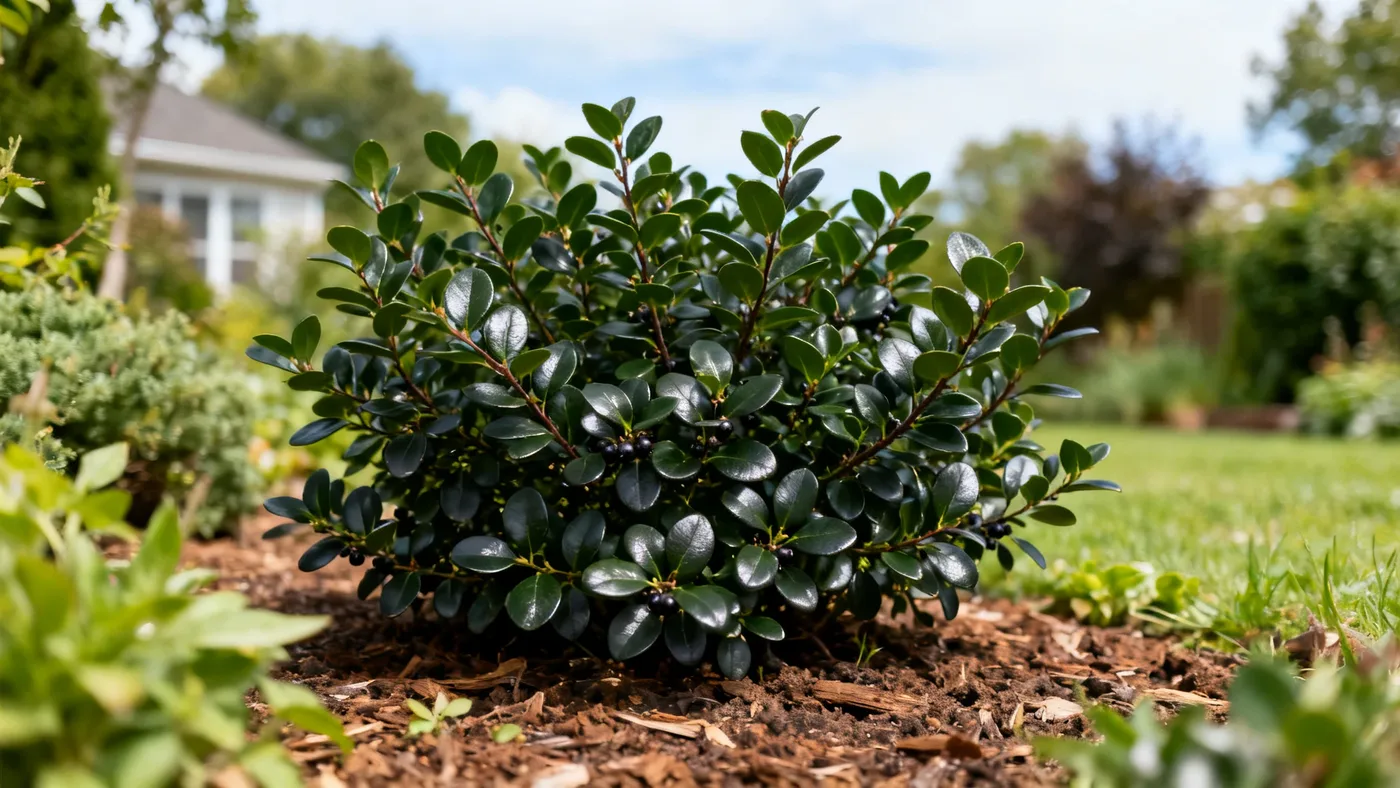
Common Chokeberry Bush Pests, Diseases and Problems
Chokeberry bush (Aronia melanocarpa) is a low-maintenance shrub with few serious issues, especially compared to other ornamentals. Still, several pests and diseases can show up, and environmental stress can cause visible problems. Knowing what to look for, and what to do about it, keeps your plants healthy and productive. Most chokeberry bush problems respond well to simple interventions, and the plant's natural resilience often works in your favor.
1. Aphids
Aphids are small, soft-bodied insects that cluster on new growth and leaf undersides. On chokeberry, they suck sap from tender shoot tips and emerging leaves, causing leaf curl, stunted growth, and sometimes a sticky residue (honeydew) on foliage below. Heavily infested plants may lose new leaves entirely or show general yellowing. Aphids reproduce quickly in warm weather, so populations can explode within a few weeks if left unchecked.
Start with a strong spray of water from the hose, which dislodges aphids and disrupts their feeding. For more stubborn infestations, insecticidal soap or neem oil works well on chokeberry; apply in the early morning or late evening when bees are not active. You rarely need more than one or two applications. If aphids persist into summer, introduce natural predators like ladybugs or lacewings by planting pollen-rich flowers nearby (such as purple coneflower, a good companion for chokeberry).
Practical takeaway: Catch aphid infestations early. Inspect new growth weekly in spring, especially if you notice leaf curling. A hose spray often solves the problem before it becomes serious.
2. Scale Insects
Scale insects appear as small, hard bumps (resembling tiny shells or armor plating) on branches and stems. They may be brown, gray, or white. Unlike aphids, scales stay in one place and suck sap over long periods. Infested branches weaken, foliage thins, and twigs can die back. Scale damage often goes unnoticed until the plant shows signs of decline, because the insects are stationary and sometimes hard to spot at first glance.
The best time to treat scales is in late winter or early spring, before they hatch, using horticultural oil or dormant oil sprays. For active infestations during the growing season, insecticidal soap can help, but it must coat every scale to be effective. Prune out the most heavily infested branches to reduce the population and improve air circulation (which scale insects dislike). Avoid over-fertilizing, as soft new growth attracts scales and makes infestations worse.
Practical takeaway: Scale infestations develop slowly. Check branch surfaces regularly, and prune out badly affected stems. Horticultural oil in late winter is the simplest prevention and treatment.
3. Borers
Borers are beetle or moth larvae that tunnel inside stems and branches. Signs of borer damage include small round or oval holes in bark, sawdust-like frass (insect droppings) near the holes, or branches that suddenly wilt or die back without obvious disease. Borers typically attack weak or stressed plants, so a healthy chokeberry is a poor target, but drought-stressed or recently transplanted shrubs are vulnerable.
Prevention is easier than treatment with borers. Keep your plant well-watered during dry spells, avoid wounding the bark with pruners or tools, and maintain overall plant health with light annual fertilizing in early spring (a balanced, slow-release formulation works best). If you spot borer damage, prune out the affected branch well below the damaged area and dispose of it in the trash, not the compost pile. No chemical sprays reliably stop borers once they are inside the plant.
Practical takeaway: Borers are opportunists. Reduce their likelihood by keeping your chokeberry vigorous and stress-free. Remove and destroy any infested branches promptly.
4. Leaf Spot
Leaf spot diseases cause circular or irregular brown, gray, or reddish patches on leaves, often with a darker border or concentric rings. Severe infections cause leaves to yellow and drop prematurely. Leaf spot spreads in warm, wet conditions, especially when foliage stays damp overnight. Infected leaves on the ground are a major source of reinfection the following season, so cleanup is critical to breaking the disease cycle.
Space plants 2 to 4 feet apart (depending on the cultivar size) to ensure air circulation, and water at the soil level in early morning rather than overhead. Remove fallen leaves and debris in autumn. Prune out diseased branches as soon as you notice them. For active infections, fungal sprays containing copper or sulfur can slow the disease, though they work best as prevention rather than treatment of established infections. Most chokeberry bushes tolerate minor leaf spot without significant impact; only treat if the plant loses a large portion of its foliage.
Practical takeaway: Prevent leaf spot through good air flow and tidy garden practices. Rake and remove fallen leaves. Pruning diseased branches stops the problem early.
5. Rust
Rust appears as rusty-orange or yellowish pustules (raised bumps) on the undersides of leaves, often with yellowish spots on the upper surface. Rust is a fungal disease that thrives in damp conditions and spreads via airborne spores. Chokeberry rust is usually more of a cosmetic issue than a serious threat, and heavily infected foliage will drop naturally as the plant moves toward dormancy, but early intervention reduces spore load for the next season.
Improve air circulation by pruning lower branches and thinning the canopy slightly. Avoid overhead watering, and rake away fallen leaves and debris in autumn to eliminate overwintering spores. Rust resistant cultivars may exist, though most Aronia melanocarpa cultivars show moderate susceptibility. Fungal sprays can help in wet years when rust appears early, but most gardeners find that good pruning and cleanup are sufficient. Prune right after flowering or in late winter to remove dead wood and improve shape while you have clear visibility of the branch structure.
Practical takeaway: Rust looks worse than it is. Prune for air flow, clean up fallen leaves, and the problem usually stays minor. Treat with fungicide only if rust appears on new growth late in the season.
6. Fire Blight
Fire blight is caused by a bacterium that affects plants in the Rosaceae family (which includes chokeberry, along with pear, apple, and hawthorn). It causes shoot tips to blacken and die back as if scorched by fire. New flowers and fruit may be affected. Fire blight spreads during wet, warm spring weather and can cause significant damage on susceptible trees and shrubs. However, chokeberry is generally more resistant to fire blight than pear or apple, and infection is occasional rather than common.
Prevention centers on avoiding conditions that favor the disease and removing infected tissue promptly. Avoid high-nitrogen fertilizers, which promote soft new growth that fire blight bacteria love. Prune out blackened branches in late winter or right after flowering, cutting at least 1 foot below the visible infection and sterilizing your pruners between cuts with a 10 percent bleach solution (1 part bleach to 9 parts water). Do not compost infected branches. During a fire blight outbreak in your area (typically spring when temperatures are warm and buds are opening), avoid pruning because the fresh wounds are entry points for infection.
Practical takeaway: Fire blight is occasional on chokeberry. Prune out affected branches promptly, sterilize your tools, and avoid wounding the plant during bloom time in wet springs.
7. Chlorosis (Yellowing in Alkaline Soil)
Chlorosis appears as yellowing leaves with green veins, starting on new growth and becoming pronounced in summer. The plant otherwise looks healthy and vigorous, but the foliage turns pale yellow or even whitish. This is chokeberry's main response to stress from high soil pH (alkaline soil). Chokeberry prefers acidic to neutral soil (roughly pH 5.0 to 7.0) and struggles in strongly alkaline conditions because it cannot absorb iron and other micronutrients even though they are present in the soil.
Test your soil pH with a simple home kit or send a sample to your local extension service. If pH is above 7.5, acidify the soil by incorporating sulfur (follow package rates for your soil type and desired pH change, as this takes time) or by applying iron chelate spray to the foliage. In the short term, iron chelate sprays provide quick greening and are safe for chokeberry. Mulch with 2 to 3 inches of acidifying material like pine needles or sulfur-enriched compost. Avoid lime or wood ash, which raise pH further. Some gardeners in high-pH areas choose to grow chokeberry in raised beds or containers with acid-adjusted soil rather than fighting the native soil chemistry.
Practical takeaway: Chlorosis signals your soil is too alkaline. A soil test confirms the problem. Sulfur and iron chelate are your best corrections. Growing in containers with acidified soil is a practical alternative if your garden's pH is very high.
8. Suckering and Colonizing Behavior
Chokeberry bush spreads via root suckers, sending up new stems from the root system some distance from the main plant. In its native habitat (swamps and woodland edges across eastern North America), this suckering habit allows the plant to form dense colonies. In the garden, it can feel invasive if you have not planned for it. The species form (growing 3 to 6 feet tall) is more prone to spreading this way than the compact, dwarf cultivars (which typically grow 1 to 2 feet tall and spread 2 to 3 feet), though even compact forms may sucker occasionally.
If suckering becomes a problem, remove suckers as they appear by digging them out or cutting them below ground. Repeat cutting will weaken the sucker, but you may need to apply an herbicide (such as glyphosate) to the cut surface to prevent regrowth. Plant barrier root cloth (landscape fabric) around the base before the problem begins, though this does not eliminate all suckering. If you are buying chokeberry for a small space, choose a dwarf cultivar like those in the Low Scape series, which have a more restrained habit. Spacing your planting 2 to 4 feet apart for mass plantings is ideal for utility and visual impact; wider spacing for a specimen plant reduces overcrowding issues.
Practical takeaway: Suckering is normal, not a disease. Choose a compact cultivar if space is limited. Remove new suckers by hand or cut them repeatedly to weaken them. Landscape fabric can slow the problem.
Quick Reference: Chokeberry Bush Problems at a Glance
| Problem | Signs | Quick Fix |
|---|---|---|
| Aphids | Curled leaves, sticky residue, stunted growth | Spray with water or insecticidal soap |
| Scale insects | Hard bumps on stems, branch dieback | Prune infested branches; apply horticultural oil in late winter |
| Borers | Round holes in bark, sawdust frass, wilting | Remove affected branches; keep plant vigorous |
| Leaf spot | Brown or reddish patches on leaves, premature drop | Improve air flow, rake leaves, remove diseased branches |
| Rust | Orange or yellow pustules on leaf undersides | Prune for air circulation, clean up fallen leaves |
| Fire blight | Blackened shoot tips and flowers | Prune 1 foot below damage, sterilize tools, avoid spring pruning |
| Chlorosis (yellowing) | Yellow leaves with green veins, pale foliage in summer | Test soil pH; apply sulfur or iron chelate for high pH |
| Suckering | New stems emerging from roots away from main plant | Dig out suckers or cut repeatedly; choose compact cultivars |
Growing Healthy Chokeberry Bush
Most chokeberry bush problems are preventable with basic care. Water regularly during the first growing season and during dry spells; once established, chokeberry tolerates moderate drought well. Space plants properly to ensure air circulation and check foliage regularly during the growing season so you spot problems early. For more complete guidance on year-round care, refer to the chokeberry bush care guide, which covers site selection, planting, pruning timing, and seasonal management. A healthy, well-sited chokeberry bush is your best defense against pests, diseases, and environmental stress.