Is Chokeberry Bush Deer and Rabbit Resistant?
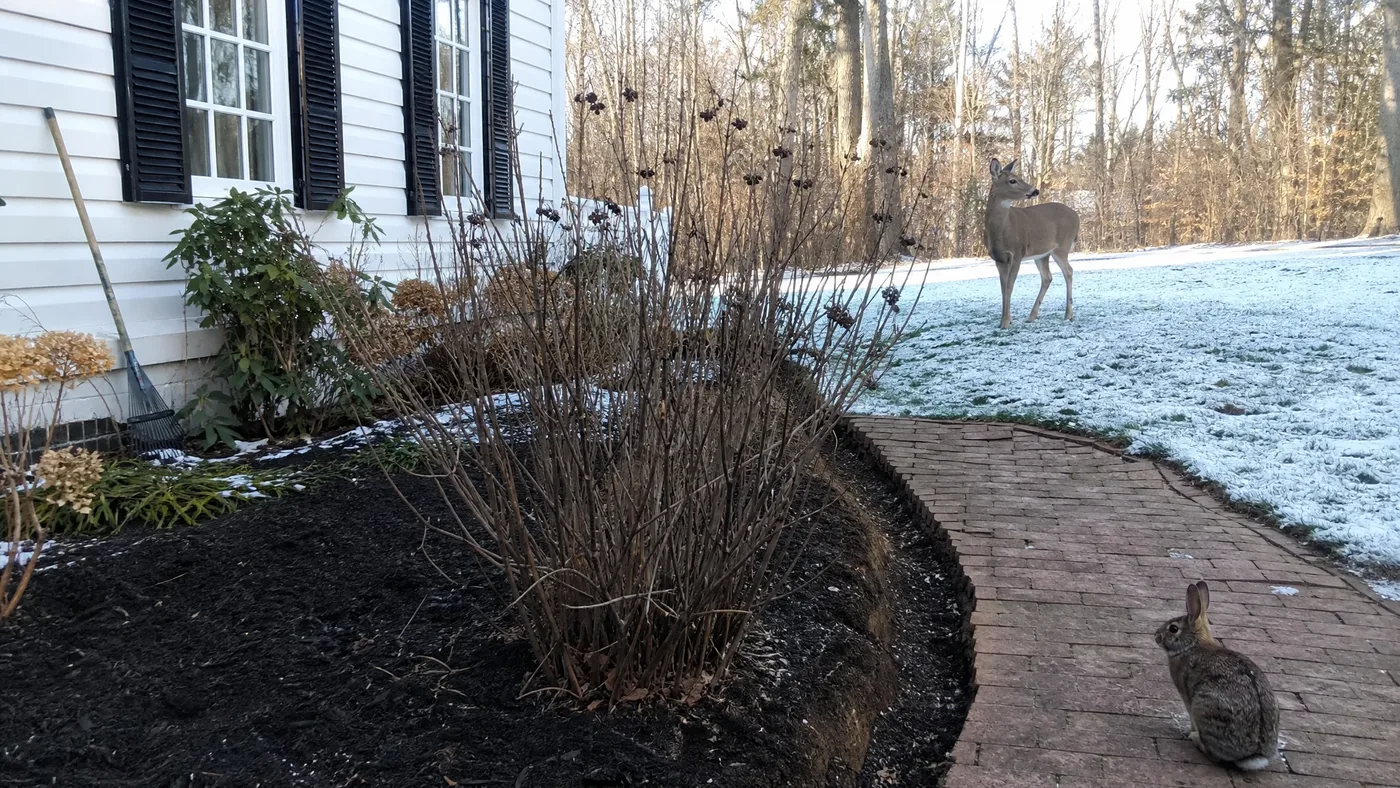
We see a photo like this every spring: a neighbor's phone snapshot of a young red chokeberry with its new shoots chewed to ragged stubs, sitting beside a planting tag that promised deer would leave it alone. The question that comes with it is always the same. Why did the deer stop here?
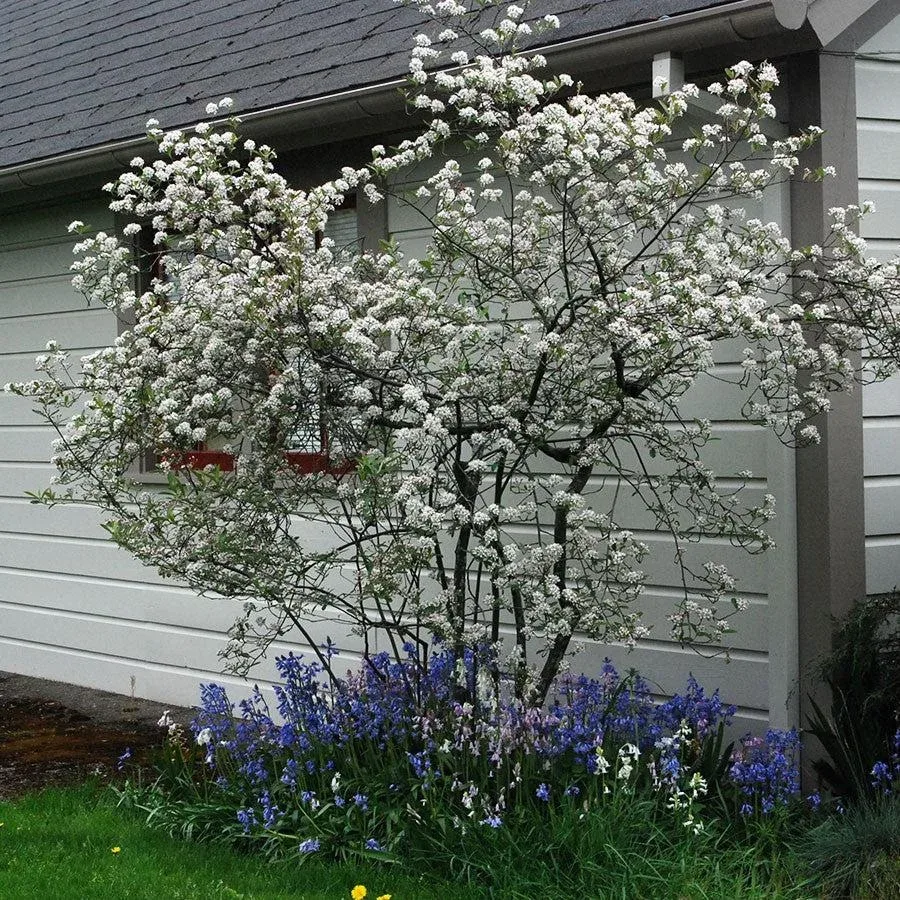
The honest answer is that red chokeberry was never a strong deer plant. NC State Extension says this plant has little resistance to damage from deer, and we see the same thing in our own rows. Rabbits get no rating at all in the sources we trust, so treat them as a risk too.
In this article, we'll go through five yard situations: a narrow side bed, a windy corner hedge, a pot on a deck, a brand-new planting and a snowy winter with hungry rabbits. Each one shows where 'Brilliantissima' needs help and what kind of help works.
The Narrow Side Bed Along the Fence
A side bed beside a fence is the hardest test of any shrub's browse tolerance, because animals pass within a step or two of the plants every day. Here is why red chokeberry gets bitten there, and how to plan around it.
Why the Taste Does Not Do the Work
Deer and rabbits are sampling feeders. They take a bite, and the taste decides whether they come back for more.
The berries are famously astringent, which means they dry and pucker your mouth, and that is where the common name comes from. Plenty of plant lists assume the whole shrub tastes that way and call it browse resistant. The extension pages for red chokeberry do not back that up. Penn State Extension calls the shrub attractive to deer and says it should be protected from browsing.
In our rows, a deer that finds an unprotected plant rarely stops at one tip. A tight bed raises the odds of that visit simply because every passing animal brushes the stems, so plan protection into the bed from the start.
Steps for a Tight Bed
Work through these steps so the shrub fits the space and comes through browsing season with its shape intact.
- Match the size to the bed. Red chokeberry grows in a vase shape to 6 to 12 feet tall and 3 to 6 feet wide, so it needs a bed at least as deep as its spread. Compare forms and sizes in our guide to chokeberry cultivars and sizes.
- Plan for suckers. A sucker is a new shoot that rises from the roots away from the main stem. Red chokeberry suckers and forms colonies, and the usual advice is to remove root suckers to keep it from spreading, so leave room or pull extra shoots as they appear.
- Keep the bed bright. The best flowers and fruit come in full sun, so a fence that shades the bed trades away berries.
- Do not count on it as a bodyguard. A shrub does not shield the plants beside it, and this one needs guarding itself. Deer judge each plant on its own. Fence the chokeberry and the tulips, or put the whole bed behind one fence.
Windy Corner Lot With a Chokeberry Bush Hedge
An exposed corner puts two pressures together: wind that dries the soil, and deer crossing from several directions. A mature red chokeberry hedge handles the soil side well. The deer side needs your help.
What a Mature Hedge Tolerates
Think of the hedge as a plant that can absorb some losses once it is big, not one that avoids them.
Red chokeberry tolerates wet sites and occasional flooding, and it is drought tolerant once established. The University of Maryland Extension says it grows in any soil texture including clay, in dry, moist or wet ground, as long as the soil is acidic. That range suits a corner where drainage and wind exposure vary from one end to the other. The shrub is hardy in zones 3 to 9.
Size depends on the source: NC State gives 6 to 12 feet tall, while Oregon State lists it to 10 feet high with a spread of 3 to 5 feet. Because the shrub grows many stems and suckers, a bitten stem can be replaced from the base. Repeated browsing of a young hedge is a different story, because it keeps the plants from ever filling in.
Setting Up the Corner
These choices keep the hedge dense and give it a fair chance against browsing.
- Give it sun. Full sun to partial shade works, and a bright corner pays you back in May with clusters of white to light pink flowers, then glossy red berries and orange to scarlet leaves in autumn.
- Let suckers fill gaps. A thicker hedge recovers faster from a bite, so thin only the shoots that wander out of line.
- Mulch, but keep it off the stems. A layer of mulch slows moisture loss in wind. Pull it back from the base so it does not give rabbits cover right where they like to feed.
- Fence the open sides while it grows. A run of deer fencing along the exposed edges protects the young hedge until the stems are tall and woody.
- Trim lightly. Our pruning guide covers cutting back, and the same rule applies here: remove bitten, ragged stems at the base instead of shearing the whole hedge to hide the damage.
A Chokeberry Bush in a Pot on the Deck
A pot on hot, dry paving changes the equation, because the roots can no longer wander to find moisture. A raised deck can also keep deer at a distance, which makes a pot one of the easier places to protect a young plant.
Why Stress Matters in a Container
The ground-planted shrub is called drought tolerant, but that describes established roots with room to search. In a pot on a deck, heat and wind empty the mix quickly.
We have no trial showing that thirsty chokeberry is browsed more, so treat this as our reasoning, not a measured result. A plant that wilts, drops leaves and then pushes out a flush of soft new shoots offers exactly the tender growth that browsers test first. Even watering keeps growth steadier and firmer. A dark pot on sun-baked paving also heats the root zone, which makes the swings in moisture worse.
Potting and Watering Steps
Follow these steps to keep the potted shrub steady and out of easy reach.
- Treat the pot as a stage, not a forever home. Our 2 gallon and 3 gallon plants settle well into a larger pot, and red chokeberry grows slowly, but it heads for 6 to 12 feet in time. Our container guide covers pot sizes, mixes and when to move it into the ground.
- Water deeply when the mix just below the surface feels dry. Soak until water runs from the drainage holes, then let it drain. The watering guide explains the rhythm.
- Move the pot off the hottest paving. Stand it on feet or a light-colored surface, and shift it nearer the house wall in a heat wave.
- Check low decks for rabbits. Rabbits can reach the base of a pot from below. A ring of wire mesh around the stems solves it.
- Plan the winter. The hardiness zones quoted for chokeberry describe plants in the ground, and roots in a pot get colder. Check with your local extension service on how to overwinter a pot in your area.
The New Chokeberry Bush Planting Deer Still Sample
A young, unestablished planting is where deer do the most harm. A shrub with little resistance to begin with has few stems to spare in its first seasons, and a lot of soft growth.
Why Young Growth Gets Tested
The University of Maryland Extension puts it mildly, saying red chokeberry is sometimes browsed by deer. A rating like that describes typical behavior across many yards, and it says little about a transplant in its first spring.
New shoots are soft and close to the ground, right at browsing height. Deer sample first and judge later. Customers usually tell us the first bite came in the first season, and the plants that came through best were the ones caged from day one.
Reading the First Bite
Before you buy a repellent or a fence, work out who did the damage. The bite tells you.
Deer have no upper front teeth, so they pull and tear, leaving a ragged, frayed edge on twigs and leaves, usually at or above knee height. Rabbits cut cleanly with a slanted edge, and they work low on the plant. A ragged tip on a young shoot means deer sampled it. A neat slant near the ground means a rabbit.
Protecting the First Seasons
Plant correctly first, using the steps in our planting guide, then add protection.
- Cage the plant on planting day. Use a wire cylinder, staked firmly, that stands clear of the stems.
- Go easy on fertilizer. Heavy feeding pushes lush, soft shoots, which is the growth animals prefer.
- Repair any damage. Cut ragged stubs back to a clean cut. The shrub should resprout from the base.
- Keep the guard on longer than you think. Remove it only when the stems are woody and the shrub has filled out, and in a yard with heavy deer traffic, plan on a permanent fence.
Growers of black chokeberry, the close relative, face the same pressure. University of Maryland Extension's page on growing it as a fruit crop says deer are one of the larger problems and that the most effective deterrent is a fence.
Rabbits at the Base of Chokeberry Bush in Deep Snow
Winter is when rabbits do their real damage to shrubs. We have not found an extension rating for rabbits on red chokeberry, so we treat it like most young shrubs, and zones 3 to 9 include plenty of snowy ground.
Why Snow Changes the Menu
Cause and effect explains the pattern better than any rule of thumb.
Snow buries grass and low plants, so rabbits turn to bark and twigs. Deep snow also lifts them higher, so they gnaw at whatever stems poke above the surface. Young stems have thin bark that is easy to strip. If the bark is removed all the way around a stem, a ring called girdling, the stem above that ring dies, because the tissue that carries water and sugars runs just under the bark.
Guard the Base Before Freeze-Up
Set the guard before the ground freezes, because rabbits begin gnawing as soon as other food runs short.
- Wrap the lower stems. Use a cylinder of hardware cloth, pressed slightly into the soil.
- Make it taller than the snow. Judge by your deepest typical drifts, not an average winter.
- Check after storms. Drifts can pile up against the guard and give rabbits a way over.
- Treat repellents as a backup. Sprays wash off in thaws and snowfall, so follow the label on how often to reapply. A physical guard keeps working without maintenance.
Repairing Gnawed Stems
If damage happens anyway, wait until growth starts in spring to judge it, since stems that look dead in winter sometimes are not.
Cut dead or girdled stems to the base once buds break. Red chokeberry suckers, so the shrub usually rebuilds from the base. Take the guard off in spring so moisture does not sit against the bark, and put it back before the next freeze.
What Every Yard Taught About Chokeberry Bush
Put the five yards together and one pattern shows up: red chokeberry tolerates almost any soil you give it, but it does not protect itself from browsers. This table shows each situation and what to do first.
| Yard | Main risk | First move |
|---|---|---|
| Narrow side bed | Animals pass close every day | Give it a bed as deep as its spread and fence the shrub along with the tulips |
| Windy corner hedge | Dry soil and browse from every side | Fence the open sides while the hedge thickens |
| Pot on the deck | Heat stress and soft regrowth | Water evenly and keep the pot out of easy reach |
| New planting | Soft first-year shoots | Cage the plant on planting day |
| Snowy winter | Gnawed bark and low stems | Guard the base above snow height |
Deer Resistant Was Never the Rating
Some plant lists call chokeberry "deer resistant." For red chokeberry, the extension sources we use say otherwise.
The three pages put it at little resistance, attractive to deer and sometimes browsed. Those read differently, but they point the same way. Pressure matters as much as the plant, so a yard with few other food sources will see more damage than one surrounded by meadow. If you want a read on local pressure, ask a neighbor or your extension office what deer take in your area.
Browsed but Worth Guarding
Red chokeberry is not deer resistant, and rabbits can strip its young stems in a snowy winter. Caged, fenced or tucked out of reach, it repays the effort with May flowers, glossy red berries and scarlet fall color.
Chokeberry Bush
Nursery-grown Chokeberry Bush in sizes from 2 GALLON, shipped to your door.
From $93.12
Shop Now →Guard young plants through their first seasons and the shrub takes care of the rest. We grow and ship these shrubs ourselves, and we would rather you know where one is likely to be nibbled before you lose it.