Chokeberry Bush vs Chokecherry: What's the Difference?
Quick Confusion Alert
The names sound nearly identical. The common names both include "cherry." But Chokeberry Bush (Aronia melanocarpa) and Chokecherry (Prunus virginiana) are entirely different plants from different genera, and they behave very differently in the garden. If you've seen these two names in nursery catalogs or online and wondered whether they were the same shrub sold under different labels, you're not alone. This post clears up which plant does what, and which one fits your garden.
At a Glance: The Core Differences
| Feature | Chokeberry Bush (Aronia) | Chokecherry (Prunus virginiana) |
|---|---|---|
| Plant Family | Rosaceae (rose family) | Rosaceae (rose family) |
| Botanical Genus | Aronia | Prunus |
| Native Range | Eastern North America (swamps, bogs) | Eastern North America (woodlands, streambanks) |
| USDA Zones | 3-9 | Zones 2-8 (roughly) |
| Mature Height (species form) | 3-6 ft | 20-30 ft (often tree-like) |
| Growth Habit | Shrub; compact cultivars 1-2 ft | Large shrub to small tree |
| Berry Color | Dark purple-black | Dark red to black |
| Edible Berries | Yes, astringent raw; used for jams and juice | Yes, edible; less astringent than chokeberry |
| Fall Color | Outstanding: vivid red to orange-red | Decent: yellow to red |
| Deer Resistance | Good to high | Moderate to high (varies by region) |
| Primary Landscape Role | Foundation planting, hedging, rain gardens, native plant gardens | Screening, naturalized areas, wildlife habitat |
Botanical Basics: Why They're Completely Different
The confusion starts with common names. "Chokeberry" and "Chokecherry" both reference the astringent taste of their berries (though chokecherry is less harsh). But botanically, they live in different genera within the Rosaceae family.
Chokeberry Bush belongs to the genus Aronia. The plant commonly grown in gardens is a compact cultivar of Aronia melanocarpa, also called Black Chokeberry. These are native to the swamps, bogs, and moist woodland edges from Newfoundland and Ontario south through the Appalachians to the Gulf Coast states. They thrive in exactly the kind of wet, poorly-drained soil that many shrubs reject.
Chokecherry belongs to the genus Prunus, the same genus that includes cherries, plums, and peaches. It grows much larger, often reaching 20-30 feet in favorable conditions, making it more of a large shrub or small tree than a foundation plant. Chokecherry is native to woodlands and streambanks across a wider eastern North American range and tends to prefer better-drained soils than Chokeberry Bush.
Growing Requirements: Where Each Excels
Sun & Drainage
Chokeberry Bush is the wet-soil specialist. It tolerates both consistently moist and poorly-drained soil because it evolved in swampy habitats. Once established, it also handles moderate drought well. Best fall color and fruit production come in full sun, but it accepts part shade.
Chokecherry prefers better-drained, slightly moist soils and is less tolerant of standing water. It performs well in full sun to part shade but doesn't have Chokeberry's native affinity for bog conditions.
Soil pH
Chokeberry Bush is highly adaptable to clay, loam, or sandy soils and prefers acidic to neutral pH (roughly 5.0-7.0). In strongly alkaline soil, it can show chlorosis (yellowing leaves). If your soil runs alkaline, Chokeberry Bush will need amending or may disappoint.
Chokecherry is generally adaptable but prefers slightly acidic to neutral conditions as well.
Hardiness
Chokeberry Bush reliably grows in USDA zones 3-9, making it one of the best cold-hardy dwarf shrubs. Chokecherry is hardy to zone 2 in many cases, so it's tougher in extreme cold, but it also grows larger and less controllably in good conditions.
Growth Rate
Chokeberry Bush grows slowly to moderately, adding roughly 6-12 inches per year. It typically flowers within 2-3 years of planting and reaches mature size in about 3-5 years. This slow, predictable growth makes it ideal for small spaces and foundation plantings.
Chokecherry typically grows faster and taller, so if you plant it expecting a small shrub, you'll eventually need to manage a much larger plant.
Appearance & Seasonal Interest
Spring Bloom
Both plants flower in mid to late spring (April-May, depending on zone). Chokeberry Bush produces clusters of small, white to very pale pink five-petaled flowers with light fragrance. The flowers are modest but abundant and attractive to pollinators. Chokecherry produces similar flower clusters, though slightly larger and more showy, and has a mild fragrance as well.
Summer Foliage
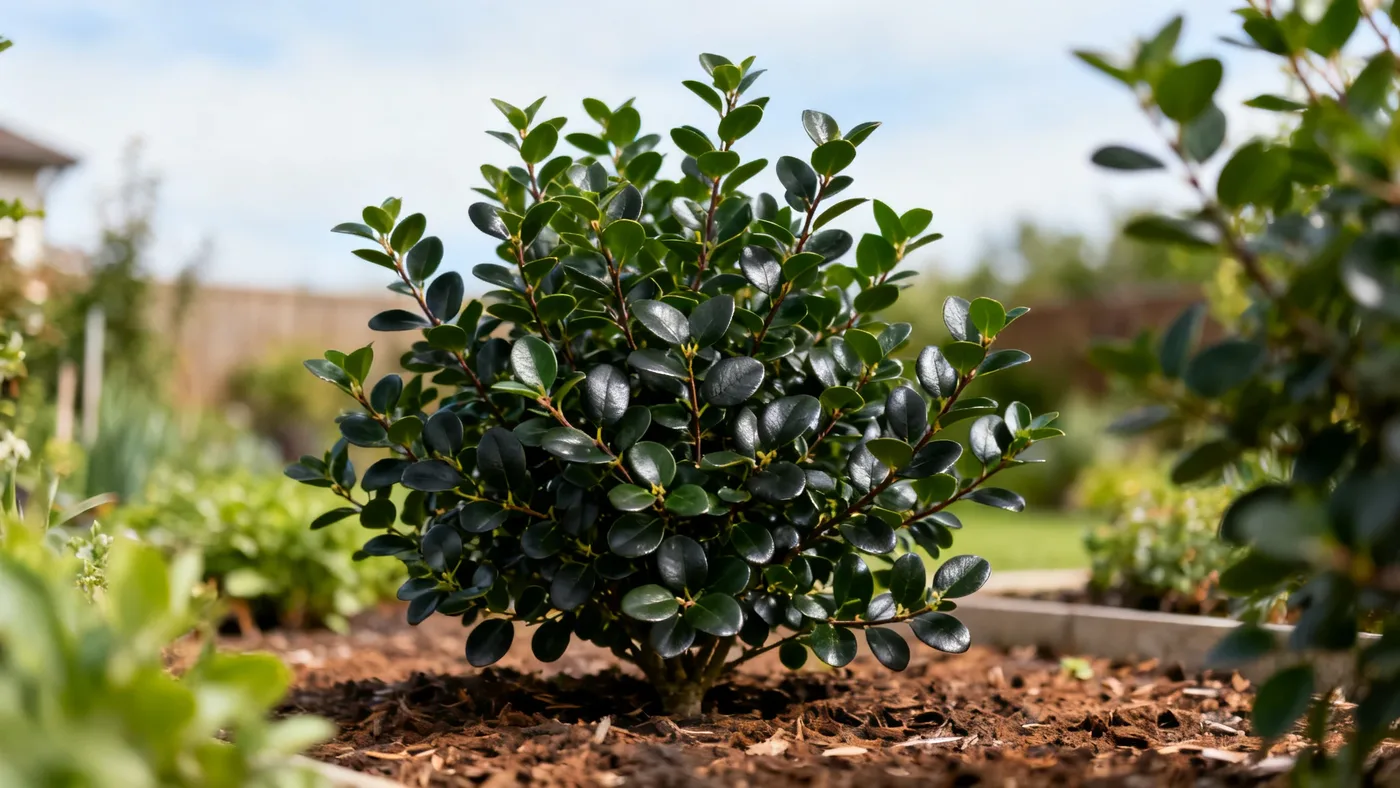
Chokeberry Bush has glossy dark green, oval leaves that look neat and polished all season. This is one reason it works so well in foundation plantings. The foliage stays tidy and doesn't show dust or drought stress as readily.
Chokecherry's foliage is coarser and less glossy, more typical of a large forest shrub or small tree. It lacks the refined appearance of Chokeberry in a cultivated landscape.
Fall Color
This is where Chokeberry Bush truly shines. It delivers outstanding fall color, transforming to vivid red and orange-red by mid-autumn. In many gardeners' experience, it ranks among the best fall-color shrubs for the eastern United States. Chokecherry offers decent fall color (yellow to red) but is not known as a fall star.
Winter Interest
Chokeberry Bush produces persistent dark purple-black berries that cling to branches well into winter, providing food for songbirds and visual interest long after the leaves drop. These berries are one of the plant's defining features.
Chokecherry also holds berries into winter (dark red to black), and wildlife prize them, but the overall structural winter interest is less refined.
Berries & Wildlife Value
Both plants produce edible berries, though the taste differs. Chokeberry berries are very astringent raw, which is why they're traditionally used for jams, juice, and syrup rather than fresh eating. The astringency is so pronounced that "chokeberry" literally refers to the puckering sensation.
Chokecherry berries are edible and less intensely astringent than chokeberry, so they're somewhat more palatable fresh, though still tart. They're also commonly made into jam.
Both attract songbirds and other wildlife. Chokeberry's berries are an important fall and winter food source for migratory birds. Chokecherry similarly supports wildlife but is valued more for its role in naturalized woodland and streamside plantings.
Landscape Uses: Which Goes Where
Chokeberry Bush Shines In:
- Foundation plantings (species form or compact cultivars work, depending on available space)
- Rain gardens and bioswales (wet-soil tolerance is unmatched)
- Low hedging (space 2-4 ft apart)
- Massed plantings for screening with minimal maintenance
- Native plant gardens and pollinator gardens
- Container growing (especially compact cultivars like Low Scape Mound type)
- Any garden where acidic to neutral soil and consistent moisture or wet drainage are reality
Chokecherry Shines In:
- Naturalized woodlands and woodland edges
- Streamside plantings
- Large-scale screening (it grows tall enough to block views)
- Wildlife habitat plantings where size is an asset, not a constraint
- Gardens in cooler zones (zone 2) where its superior cold tolerance matters
- Situations where you want a multi-season native shrub-tree and have room for 20-30 ft of height
Pros and Cons: The Honest Breakdown
Chokeberry Bush Pros
- Exceptional fall color; one of the most reliable red-to-orange performers
- Tolerates poorly-drained and wet soils that reject most shrubs
- Compact size and slow growth (3-6 ft species form, 1-2 ft for cultivars) fit small spaces
- Persistent berries and outstanding winter interest
- Minimal pruning and fertilizing required
- Good to high deer resistance
- Attracts pollinators and songbirds
- Hardy to zone 3
- Responds well to container growing
Chokeberry Bush Cons
- Can show chlorosis (yellowing) in alkaline soils above pH 7.0
- Slow growth means patience is required to reach mature size
- Species form can spread by root suckers in some situations
- Less showy flowers than some competing shrubs
Chokecherry Pros
- Extremely hardy (zone 2 in many regions)
- Larger size useful for screening and backdrop plantings
- Edible berries less astringent than chokeberry
- Strong wildlife value
- Low maintenance once established
Chokecherry Cons
- Often grows much larger than expected (20-30 ft), requiring space and eventual pruning
- Less reliable fall color than Chokeberry Bush
- Coarser texture and less refined appearance in formal or small-space landscapes
- Dislikes wet, poorly-drained soils
- Susceptible to tent caterpillars in some regions
- Spreads readily by seed and root suckers, potentially colonizing surrounding areas
Best For: Quick Recommendations by Use Case
Choose Chokeberry Bush If You:
- Want outstanding, reliable fall color
- Have a rain garden, bioswale, or naturally wet/boggy spot in your yard
- Need a shrub for a foundation planting or massed border
- Prefer a plant that stays compact and predictable
- Want persistent winter berries and songbird habitat
- Are planting in a container or raised bed
- Prefer minimal pruning and maintenance
- Prefer an acidic to neutral-soil specialist
- Like the idea of edible berries for homemade preserves
Choose Chokecherry If You:
- Have room for a large shrub or small tree (20-30 ft)
- Are in a very cold climate (zone 2) where Chokeberry Bush barely stretches
- Want to naturalize a woodland or streamside planting
- Need significant screening or backdrop vegetation
- Prefer berries that are less astringent and more palatable fresh
- Are creating wildlife habitat where size and space are not constraints
Growing Chokeberry Bush: The Right Start
If Chokeberry Bush fits your needs, our complete growing guide walks you through planting, watering, pruning, and seasonal care. The short version: plant in spring or fall in consistently moist, acidic to neutral soil with full sun for best fall color. Water regularly during the first season. After that, you have a low-maintenance shrub that thrives on neglect.
Quick Reference Table
| Question | Chokeberry Bush | Chokecherry |
|---|---|---|
| Can it handle wet, poorly-drained soil? | Yes, excels in it | No, prefers better drainage |
| What's the typical mature height? | 3-6 ft (species); 1-2 ft (compact cultivars) | 20-30 ft (large shrub or tree) |
| Is fall color outstanding? | Yes, vivid red-orange | Decent, yellow-red |
| Do birds eat the berries? | Yes, important winter food source | Yes, wildlife prize them |
| Can I grow it in a container? | Yes, especially compact cultivars | No, too large |
| Is it a good foundation plant? | Yes, compact and tidy | No, grows too tall |
| Hardy to which zone? | Zone 3-9 | Zone 2-8 (roughly) |
| Low maintenance? | Yes, minimal pruning needed | Yes, but size requires management |
| Preferred soil pH? | Acidic to neutral (5.0-7.0) | Slightly acidic to neutral |
| Are the berries edible? | Yes, very astringent (jams, juice) | Yes, less astringent than chokeberry |