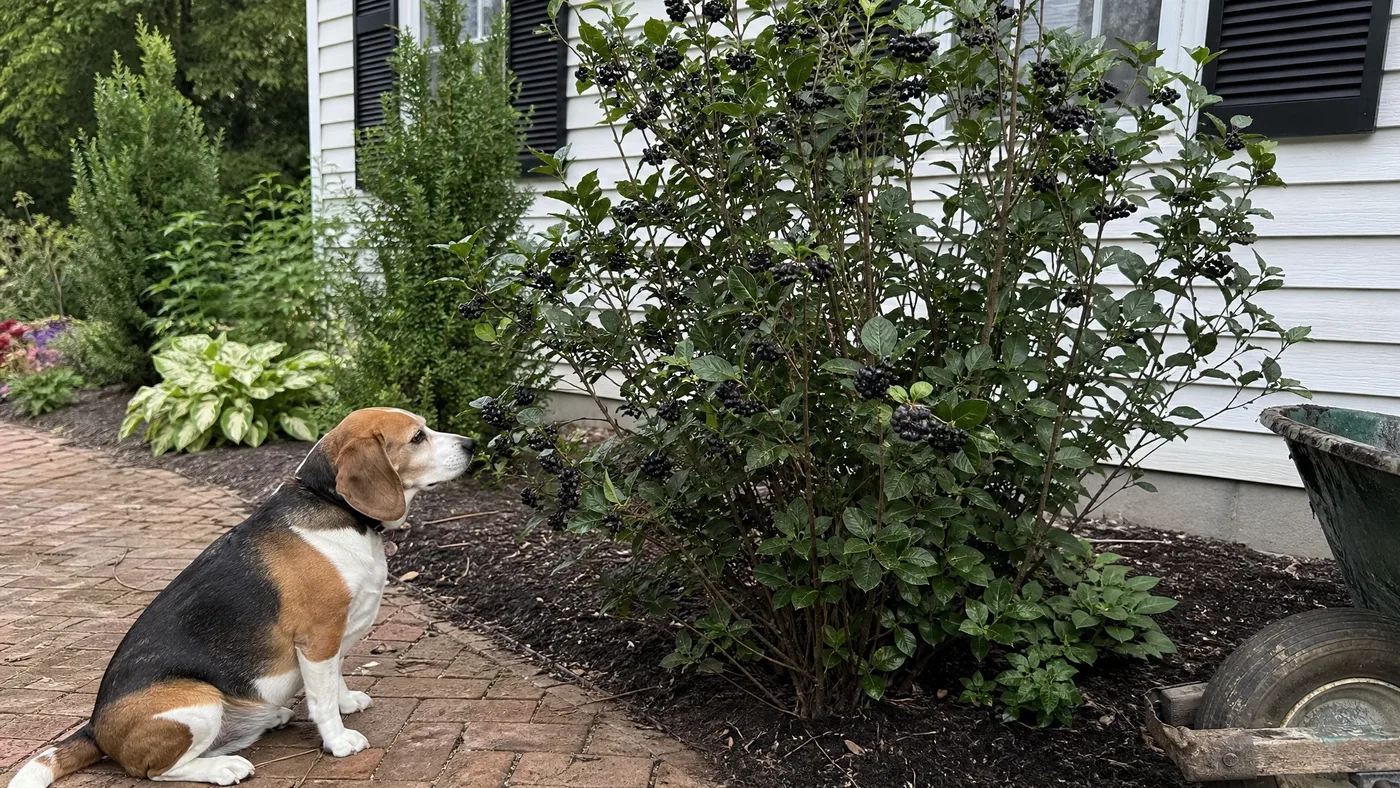
Is Chokeberry Bush Toxic to Dogs, Pets and People?
Bite a fresh red chokeberry and you feel it before you taste it. The glossy skin gives, the juice floods in, and then comes that dry, puckering grip that pulls at your tongue and cheeks as if every drop of moisture had been drawn out at once. It is a memorable sensation, and it sets off a worry in plenty of people who then read the word "choke" on the plant tag.
That worry deserves a careful answer, not a breezy one. Read on for what the name really means, what the published sources say and do not say about dogs and other animals, how Aronia differs from chokecherry, and what is known about the leaves, stems and seeds. Where the sources are silent, we tell you so, and we point you to your vet or a poison center rather than guess.
Does the Name Chokeberry Bush Mean Poison?
No, the name itself is not a poison warning, and the reason is in your own mouth. The name describes a texture, not a toxin, and it helps to see exactly where it comes from.
Where "Choke" Comes From
NC State Extension says the fruits of red chokeberry are edible but so astringent that they may cause choking, and it adds "hence the common name." That is the whole origin. Someone long ago ate a handful straight from the shrub, felt their mouth and throat go dry, and named the plant after the sensation.
One of the most common questions we get is whether the name is a warning label. It is not. A name like this tells you about the experience of eating the fruit. It does not, on its own, tell you that every part of the plant is safe for every animal, which is why the rest of this guide sticks to what the sources actually say.
What the Fruit Really Is
The fruit of our 'Brilliantissima' red chokeberry is a glossy red pome about ¼ to ⅓ inch across, and although everyone calls it a berry, it is botanically a pome. The fruits mature from September to November and may hang on through the winter, so the puckery moment can arrive any time from early fall into the cold months.
The same source calls the fruit edible, suggests it for jams and jellies, and notes that red chokeberry is sweeter than black chokeberry. It also lists the shrub for children's, edible and pollinator gardens. That is not a safety certificate, but it is not the way an extension service writes about a plant it is warning you about.
If you want the full tasting and cooking picture, our guide to eating chokeberry berries and cooking with them goes further. For this question, the belief that a scary name signals a poisonous plant does not hold up. The name is a taste report, and a fair one.
Will Chokeberry Bush Berries Make a Dog Sick?
Dogs are the animals people ask about most, so here is exactly what we can and cannot say. We are growers, not veterinarians, and this section is not veterinary advice.
What the Sources Say
The extension entry we rely on for red chokeberry gives no poison severity, no toxic principle and no poison symptoms. Its entries for chokecherry and winterberry holly do list them, so the gap stands out. We found no published veterinary source on dogs eating red chokeberry, and no toxic dose, so we will not invent a number to sound more certain.
Not listed is not the same as proven safe. A missing warning means nobody we can cite has flagged the plant. It does not mean anyone has tested it on dogs, and that is the honest limit of what any grower can tell you.
If Your Dog Eats a Lot
We cannot predict how your dog will react, and no source we found does either. Size, health and the amount eaten all matter, and a dog that strips a fruiting branch has eaten skins, flesh and seeds together.
The puckery grip may slow some dogs down, but do not count on it. If your dog has eaten more than a nibble, treat that as a reason to call your vet now rather than wait and see.
When to Call Your Vet
Call your veterinarian or an animal poison control center if your dog has eaten a large amount, if it seems unwell afterward, or if you are not completely sure the plant was Aronia. That last point matters most, because the look-alikes carry real warnings.
Keep a berry, a leaf and the plant tag in a bag so the vet can see what was eaten, and move the dog away from the shrub while you sort it out. If a person, especially a child, has swallowed something you are unsure about, call a poison center at 1-800-222-1222.
Chokecherry Pits Are Not a Chokeberry Bush Problem
Most of the frightening stories come from chokecherry, a different plant with a confusingly similar name. Once you separate the two, much of the fear is explained in one step.
The Look-Alike With a Real Warning
Common chokecherry (Prunus virginiana) is a different genus. New Mexico State University Extension states that all parts of the plant except the meaty part of the fruit are poisonous, including the leaves, stems and fruit pits, and that the acid increases when the plant is stressed by drought or frost.
Utah State University Extension adds that chokecherry is believed to be poisonous to all classes of livestock, with signs such as distress, rapid breathing and salivation. When you read online that a "choke" plant can hurt an animal, this is usually the plant being described.
Two Plants, Two Sets of Facts
This table sets out what the sources say about each plant, so the difference is plain.
| Point | Red chokeberry | Chokecherry |
|---|---|---|
| Fruit | Glossy red pome about ¼ to ⅓ inch across, called edible | Red fruit that turns black when ripe, flesh edible, pits poisonous |
| Cyanide note | No poison information listed in the sources we use | Leaves, stems and seeds contain hydrocyanic acid |
| Riskiest moment | No specific risk listed | Rises when the plant is stressed by drought, frost or wilting |
| Why the name | Astringent fruit that may cause choking | Bitter, puckering raw fruit, so check the botanical name |
We often see customers call a healthy Aronia a chokecherry, and then worry about it for a season. The botanical name settles it. We grow red chokeberry, Aronia arbutifolia 'Brilliantissima', and label it that way, so the tag in the pot answers the look-alike question before it comes up.
For help telling the two apart by sight, our guide to how chokeberry and chokecherry differ covers the details.
Other Pets Near a Chokeberry Bush Hedge
Dogs get the attention, but people also keep cats, horses and chickens near a planting, and a hedge is a busy place. Here is what is known for each, and where the sources go quiet.
Cats, Horses and Chickens
The sources we use do not discuss cats, horses or chickens in connection with red chokeberry, so we will not claim a verdict for them. If you keep these animals and want a firm answer, ask your veterinarian before you plant, and ask your local extension office about livestock.
One practical point does follow from the chokecherry pages. If animals share space with a hedge, make sure every shrub in it really is Aronia and not chokecherry, and keep chokecherry clippings away from them, since stressed and wilted foliage is when that plant is most dangerous.
Birds, Deer and Other Wildlife
Wildlife is where the record is clearer. The University of Maryland Extension says the red chokeberry's berries feed a variety of birds, naming mockingbirds, cedar waxwings and blue jays among them, and notes the shrub is sometimes browsed by deer. Mammals eat the winter berries as well.
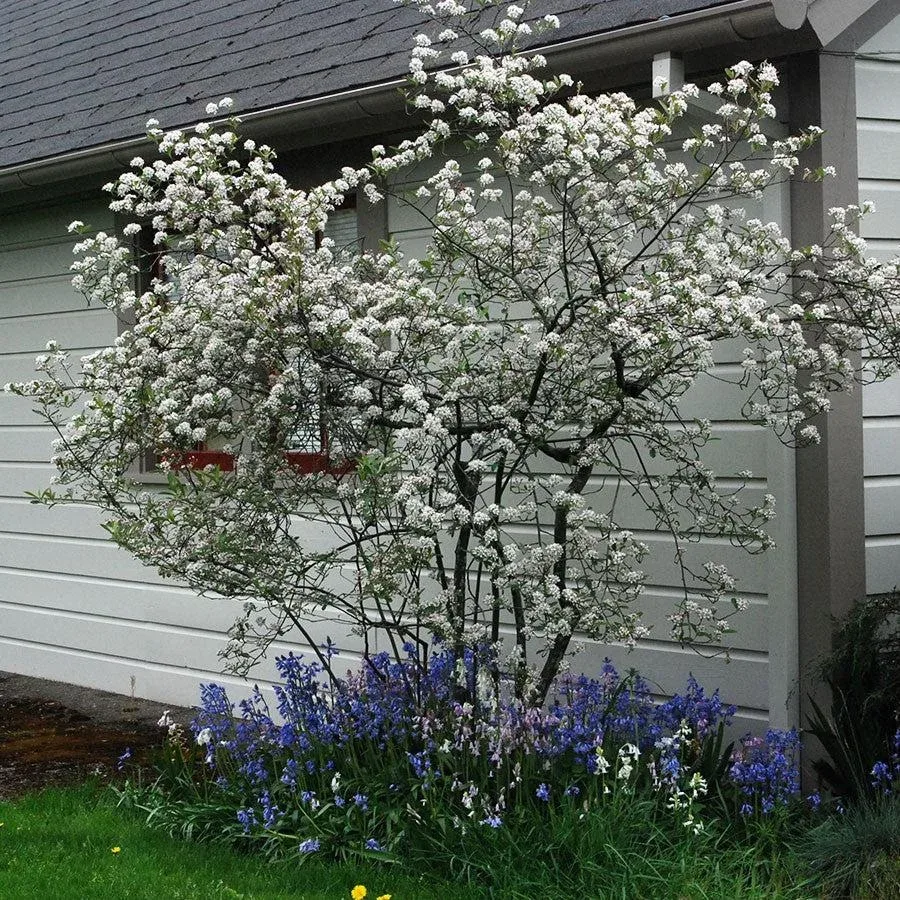
The visitors start in spring, when white to light pink flowers open in May and butterflies and other pollinators come for the nectar. Keep in mind that a wild bird eating a berry tells you nothing reliable about your pet, since animals differ.
Our guide to the birds and pollinators chokeberry feeds and the one on when chokeberry blooms cover the season in more detail. Red chokeberry has little resistance to deer, so protect young plants for the sake of the shrub.
The Puckery Bite Is Not a Warning Sign
It is easy to assume that anything that tastes harsh must be harmful. Taste turns out to be a poor guide in both directions, and it helps to understand why.
What Astringency Is
That dry, grabbing feeling is astringency, the same kind of drying you notice after strong black tea. Your mouth loses its slick feel and your cheeks seem to pull inward.
It is a sensation, and with red chokeberry it is strong enough to have named the plant. A lot of well-loved foods are astringent, and we do not treat their grip as a danger sign on its own.
Taste Is Not a Toxin Test
Some advice says that if a berry tastes bitter you should spit it out and assume poison. We think that rule is too blunt in both directions. Bitterness and toxicity are separate things, and this plant shows it: the fruit is intensely puckery and still listed as edible.
Color is no test either. Winterberry holly, another native shrub with bright red winter fruit, is listed by NC State with low severity poison characteristics in its fruits and leaves. Taste and color cannot tell you which plant you are holding. The botanical name and the plant's other features can.
Making the Berry Friendlier
Cooking the fruit into jams or jellies is the usual advice, and we agree. Red chokeberry jellies are heavy and set well because the fruit carries plenty of pectin, and sugar tames the grip.
Eaten raw, a few berries are plenty, and many people stop at one. Only eat fruit from a shrub you have identified for certain.
Leaves, Stems and Seeds: What the Record Shows
A fair question is whether the fruit is fine for people but some other part is not. We checked every part against the sources, and here is what they show and where they stop.
Leaves and Stems
The leaves are best known for what they do in autumn. They turn orange to bright red in October, and 'Brilliantissima' is prized for its scarlet color. None of the red chokeberry sources we use attaches a poison warning to the foliage or the stems.
The cyanide statements we found, covering leaves, stems and pits, belong to the chokecherry pages, not to Aronia. For a look at that autumn show, see why chokeberry leaves turn red in fall.
Seeds
Each red chokeberry fruit holds one to five small seeds. The sources we rely on do not single the seeds out as a hazard, and they give no seed toxicity figure either way. We can only report that gap, not fill it.
Chokeberry and chokecherry are both in the rose family, and the chokecherry seed warning is well documented. Because nobody we can cite has ruled seeds in or out for Aronia, we would not let a pet eat them by the bowlful, and we would ask a vet about any large helping.
A Sensible Habit
Chewing on any shrub can upset a stomach, so we would not encourage a dog to strip the branches. That is general caution, not a finding about this plant.
If something does look wrong after your pet has eaten part of any garden shrub, call your vet, and give them the botanical name so they know what they are dealing with.
Red Chokeberry, Handled With Common Sense
The name comes from the fruit's astringent bite, the cyanide stories belong to chokecherry, and the sources we use call red chokeberry fruit edible and list no poison information for the shrub. They also do not test it on pets, so keep a dog from gorging on the berries and ask your vet about cats, horses or chickens.
Chokeberry Bush
Nursery-grown Chokeberry Bush in sizes from 2 GALLON, shipped to your door.
From $93.12
Shop Now →Our growers watch red chokeberry through the year, from the white May flowers to the scarlet leaves and the glossy red fruit of fall. We grow and ship these shrubs ourselves, labeled Aronia arbutifolia 'Brilliantissima', so you always know which plant is in your yard.