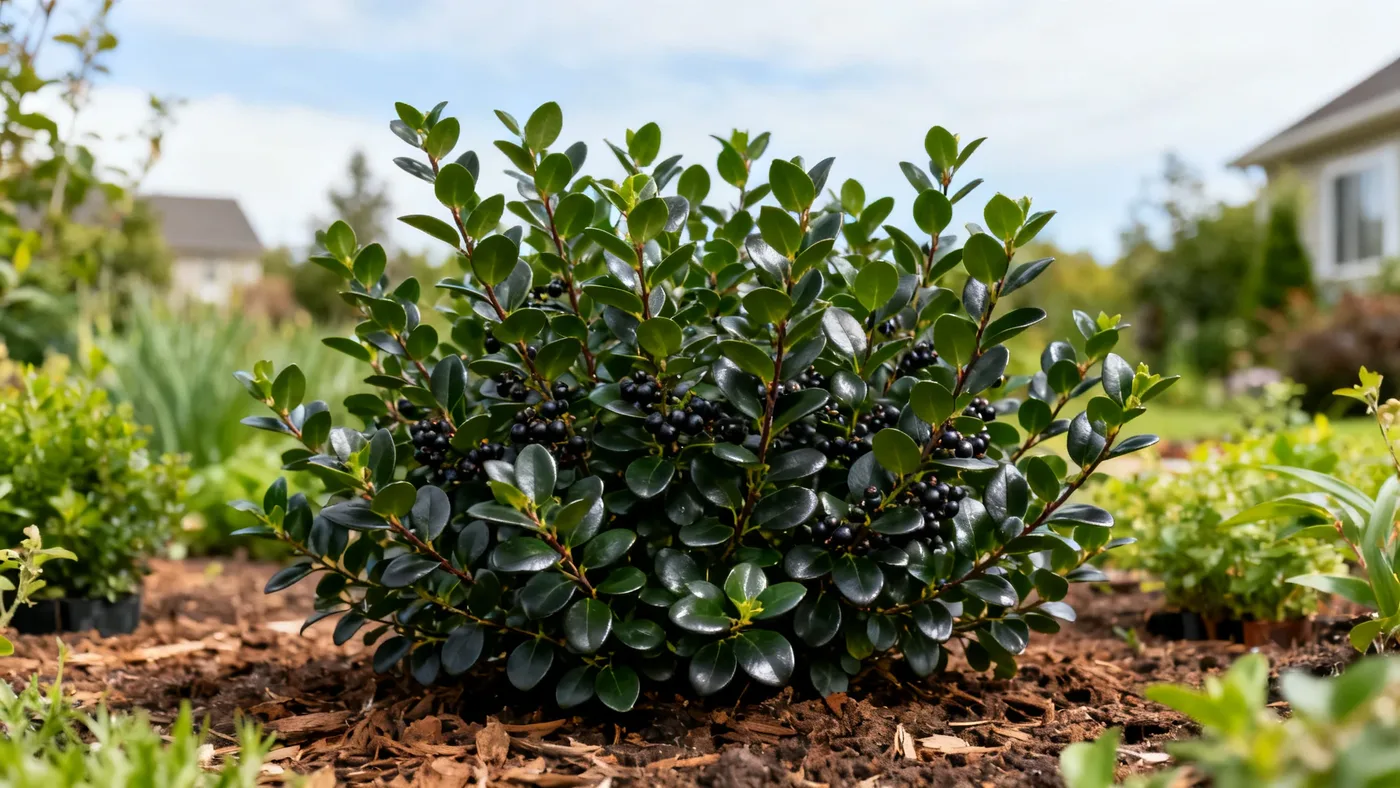
Chokeberry Bush Sun Requirements: Full Sun or Part Shade?
Chokeberry thrives in full sun but tolerates part shade, giving you flexibility when planning your landscape. However, your choice of location directly affects two things you probably care about: how vibrant your fall foliage becomes and how heavily your plant fruits. This guide walks you through assessing your garden's light, selecting the right spot, and planting your chokeberry to get the results you want.
Understanding Chokeberry's Light Needs
Chokeberry bush (Aronia melanocarpa) performs best in full sun to part shade. "Full sun" means 6 or more hours of direct sunlight daily. "Part shade" means 3 to 6 hours of direct sun, or dappled light throughout the day. The plant will survive in shadier spots, but you'll notice the trade-off: trees in part shade produce fewer berries and show less dramatic fall color than those in full sun. If your primary reason for planting chokeberry is its outstanding red-to-orange-red fall foliage, full sun is worth prioritizing.
The good news is that chokeberry is forgiving. It doesn't scorch or bleach in intense sunlight, and it won't fail in moderate shade. This adaptability makes it a practical choice for many garden layouts.
Materials You'll Need
- A measuring tape or ruler
- A notebook to track observations
- Sunlight meter app (optional, for precise measurements)
- Soil pH test kit (useful, though chokeberry adapts to most soil types)
- Spade or shovel for site prep
- 2 to 3 inches of organic mulch
- Watering can or hose
Assessing Your Garden's Sunlight
Before you dig, spend a day observing your potential planting locations. This simple assessment saves regret later.
Step 1: Map Direct Sunlight
Walk your garden in the morning, at midday, and in late afternoon. Note which areas receive direct sunlight at each time. Pay attention to shadows cast by trees, fences, and buildings. These shadows shift with the season, but a general pattern is clear. Mark or mentally note the areas that stay sunny most of the day.
Step 2: Count Hours
Spend one full day (or use multiple clear days) tracking how many hours of direct sun hit your top candidate locations. Stand in the spot at sunrise, mark the time, then return when shadow engulfs that area. Repeat in the afternoon. Full sun sites typically receive 6 to 8 hours of direct light. Part-shade sites receive 3 to 5 hours. Even part-shade chokeberry thrives in zones 3 through 9, so don't write off a shadier spot just yet, especially if other factors favor it.
Step 3: Check for Reflected Heat
Pavement, light-colored walls, and south-facing slopes reflect and intensify sunlight. This can help a part-shade location perform more like full sun. Similarly, dense tree canopy can filter harsh afternoon rays in hot climates, reducing stress on newly planted specimens. Note these microclimate details.
Choosing Your Planting Location
Use your observations to match the location to your goals and conditions.
Step 4: Match Light to Your Objective
For maximum fall color and fruiting: Choose full sun (6+ hours daily, ideally morning and afternoon). Chokeberry in full sun develops the most vivid red-to-orange-red leaves in fall and produces abundant dark purple-black berries that persist through winter. This spot also supports bees and songbirds, since flowering and fruit production are most robust here.
For shade tolerance with acceptable results: Part shade (3 to 6 hours daily) works if your garden layout demands it. Growth remains steady at roughly 6 to 12 inches per year. Foliage will be green and healthy during the growing season, though fall color may shift toward softer reds rather than vivid orange-reds. Berry production drops slightly but remains useful for wildlife and visual interest. Compact cultivars marketed under names like "Low Scape Mound" adapt well to part shade and maintain their 1-to-2-foot mature height.
For wet or rain-heavy sites: Chokeberry tolerates poorly drained and wet soil, a trait inherited from its native range in Eastern North American swamps and bogs. If your full-sun spot is soggy, that's acceptable; don't force the plant into a drier but shadier location. Wet and part shade is workable. Wet and deep shade is the compromise to avoid.
Step 5: Confirm Soil and Site Prep
While you're assessing light, check the soil. Dig a small hole (8 to 10 inches deep) in your chosen location. Chokeberry adapts to clay, loam, and sandy soils and tolerates acidic to neutral pH (roughly 5.0 to 7.0). Break up any compacted soil in the planting area, working in 2 to 3 inches of compost or aged manure if the soil is very dense or poor. This step helps with drainage and root establishment, especially important if your site is part shade and tends to stay moist.
Planting and Early Care
Step 6: Plant at the Right Time and Depth
Plant chokeberry in early spring or fall. Dig a hole twice as wide as the root ball and just as deep. Set the plant so the top of the root ball sits level with the ground surface. Backfill with the native soil mix and tamp gently. Water thoroughly to settle the soil around the roots. Spread 2 to 3 inches of mulch around the base, keeping it a few inches away from the stem to prevent rot and stem borers.
Step 7: Water and Monitor
Water deeply after planting and keep the soil consistently moist (not waterlogged) for the first growing season. Chokeberry reaches full maturity in roughly 3 to 5 years and establishes moderate drought tolerance once settled, but young plants appreciate regular moisture. Check soil before watering, aiming for moist but not soggy conditions. In part-shade locations, soil stays wetter longer, so water less frequently than you would in full sun.
Tips and Common Mistakes
Mistake: Planting in deep shade and expecting great fall color. Chokeberry needs light to produce the pigments that create its stunning fall display. While the plant survives in shade, the foliage will remain duller green and yellow rather than brilliant red-orange. If fall color is your goal, full sun is non-negotiable.
Mistake: Overwatering in part shade. Shadier locations dry out more slowly. Part-shade chokeberry often needs less frequent watering than a full-sun specimen. Check the soil before each watering, and reduce frequency in cooler months or after rain.
Tip: Use a young plant's first year to observe light patterns. If you're uncertain about a location, plant and watch. Chokeberry grows slowly enough (6 to 12 inches per year) that moving it to a sunnier spot after one season, while not ideal, is feasible if the location clearly underperforms.
Tip: Combine chokeberry with understory companions. In part-shade settings, pair chokeberry with shade-tolerant plants like purple coneflower or sweetspire (Itea virginica). This maximizes the visual appeal of a location that receives moderate light.
Tip: Prune lightly to improve light penetration. After flowering (mid-to-late spring), remove any crossing branches or dense interior growth. This allows more light to reach the center of the shrub and can improve fruiting even in part-shade sites.
Common question: Will chokeberry do well on the north side of my house? A north-facing location receives little to no direct sun and typically gets dappled, diffuse light. Chokeberry will survive but may grow slowly and produce minimal berries. Reserve north sides for truly shade-tolerant plants. If a north-facing location is your only option, choose a spot on the east or west edge where morning or afternoon sun reaches the plant for a few hours.
Expected Results
A chokeberry planted in full sun typically produces glossy dark green foliage during summer, displays outstanding red-to-orange-red fall color from mid-autumn onward, and bears abundant dark purple-black berries from late summer through winter. Growth proceeds at 6 to 12 inches per year, reaching mature size (1 to 2 feet for dwarf cultivars, 3 to 6 feet for species forms) in 3 to 5 years. The plant attracts bees during its white-to-pale-pink spring blooms and draws songbirds to the berries in fall and winter.
A chokeberry planted in part shade shows healthy green foliage but milder fall color, modest fruit production, and slightly slower early growth. The plant remains attractive and functional, particularly for wildlife and landscape structure, but the dramatic seasonal displays are less pronounced.
Quick Reference: Sun Exposure Chart
| Light Condition | Hours of Direct Sun | Fall Color | Fruit Production | Best For |
|---|---|---|---|---|
| Full Sun | 6+ hours daily | Outstanding red-orange | Abundant | Maximum beauty and wildlife value |
| Part Shade | 3-6 hours daily | Good, softer tones | Moderate | Flexible layouts, understory plantings |
| Mostly Shade | Under 3 hours | Muted green-yellow | Sparse | Not recommended for Chokeberry |
For comprehensive care beyond sun exposure, see Chokeberry Bush Care: A Complete Growing Guide.